South-east Asia
Cambodia
A country that doesn't hide its scars, and doesn't force its temples on you.
This is Cambodia
Overgrown temples and a quiet resilience that speak louder about the past than any history book.
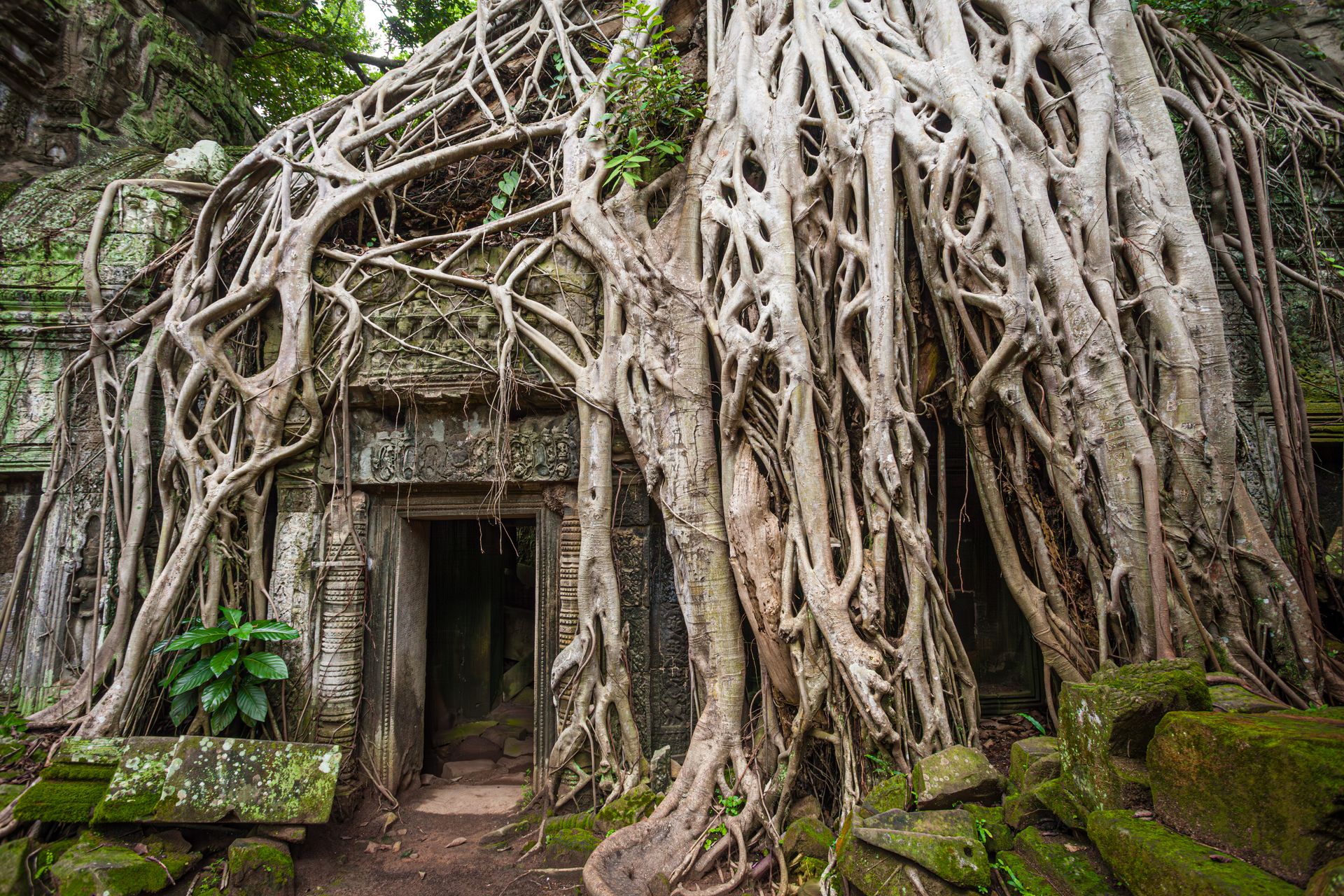
North of Siem Reap lies not a single temple, but an entire landscape of them: Ta Prohm, where fig trees have taken over the walls, Beng Mealea, never cleared, Koh Ker with its pyramid deep in the forest. Angkor Wat is the gateway, not the whole story. Keep driving and you'll find temples where the roots still have the upper hand over the sandstone.
Beneath that backdrop lies a history the country neither hides nor puts on display. The years of the Khmer Rouge remain palpable, in conversations and at places like Choeung Ek, and are at the same time overgrown by a country that simply carries on: markets already busy by six in the morning, monks crossing the street at sunrise for their alms round, children swimming in the Tonlé Sap. Those two layers together, that is Cambodia.
The regions
From temple forest to river delta
Cambodia is more compact than its neighbours, but changes face faster: from temple forest to river city, from lake to mountain forest, from bustle to nothing at all.

North-west, temple country
Siem Reap & Angkor
More than a thousand temples spread across forest and rice paddy, from the world-famous Angkor Wat to remote ruins like Banteay Chhmar, where you can go hours without meeting a soul.
South, on the Mekong
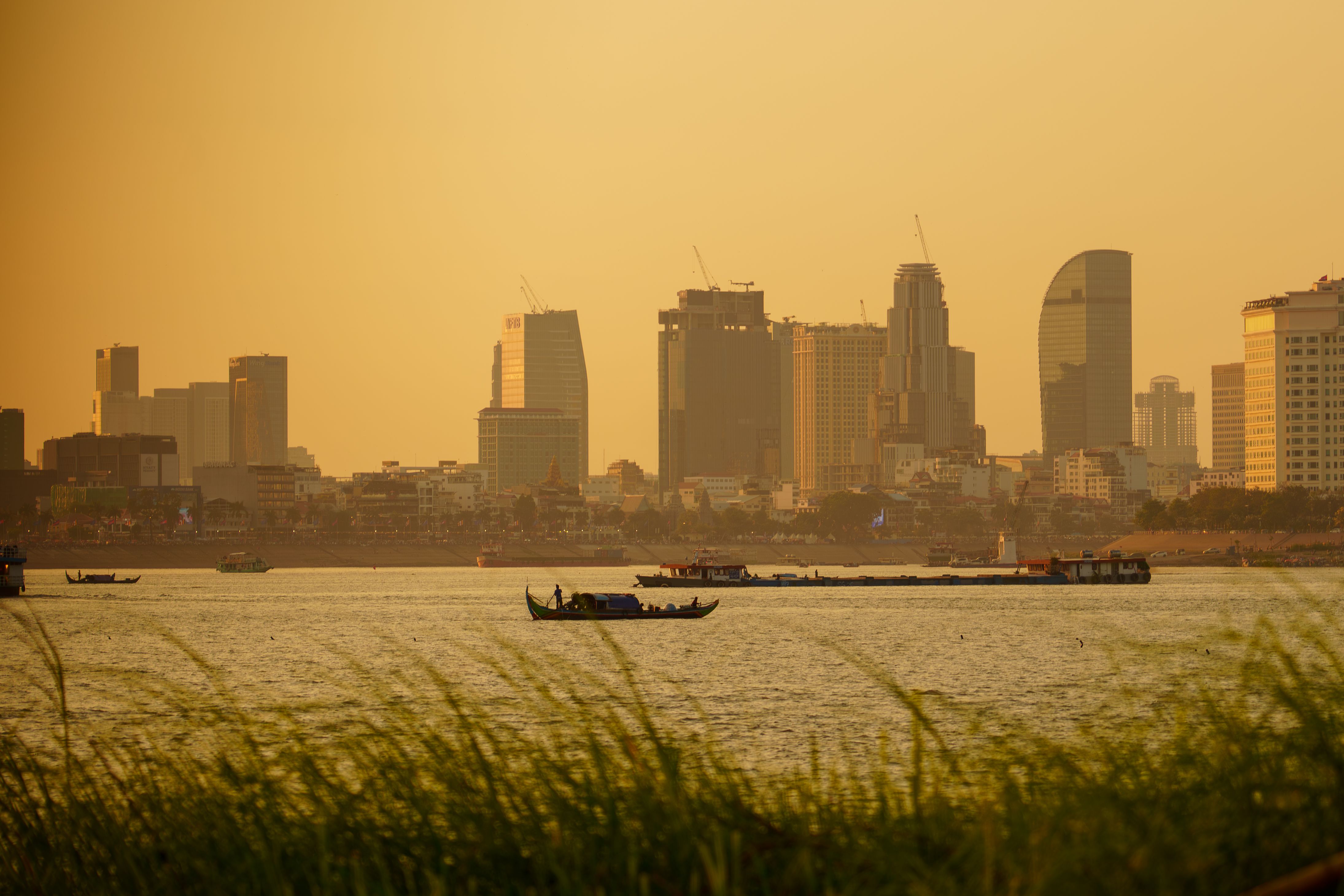
Phnom Penh
French colonial façades next to golden palace roofs, a riverside that fills up every evening, and a capital that doesn't hide its recent history.

Central, the great lake
Tonlé Sap
A lake that grows to four times its size in the rainy season, with floating villages, floating schools, and a fishing trade that follows the rhythm of the water.

South-west, rainforest
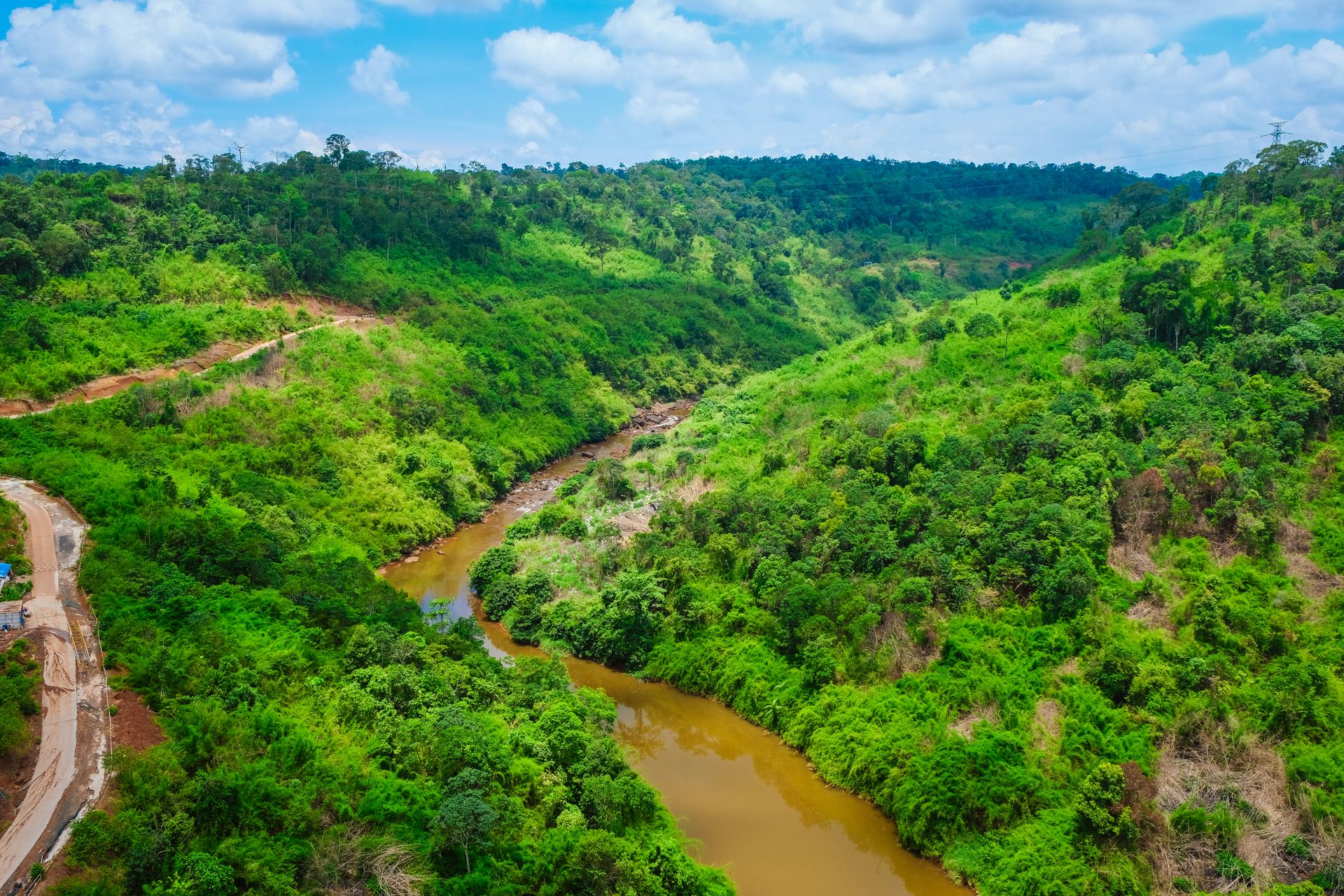
Cardamom Mountains
One of the last great rainforests of South-east Asia, home to elephants and gibbons, and rivers that still have no name on any map.
South, coast and pepper
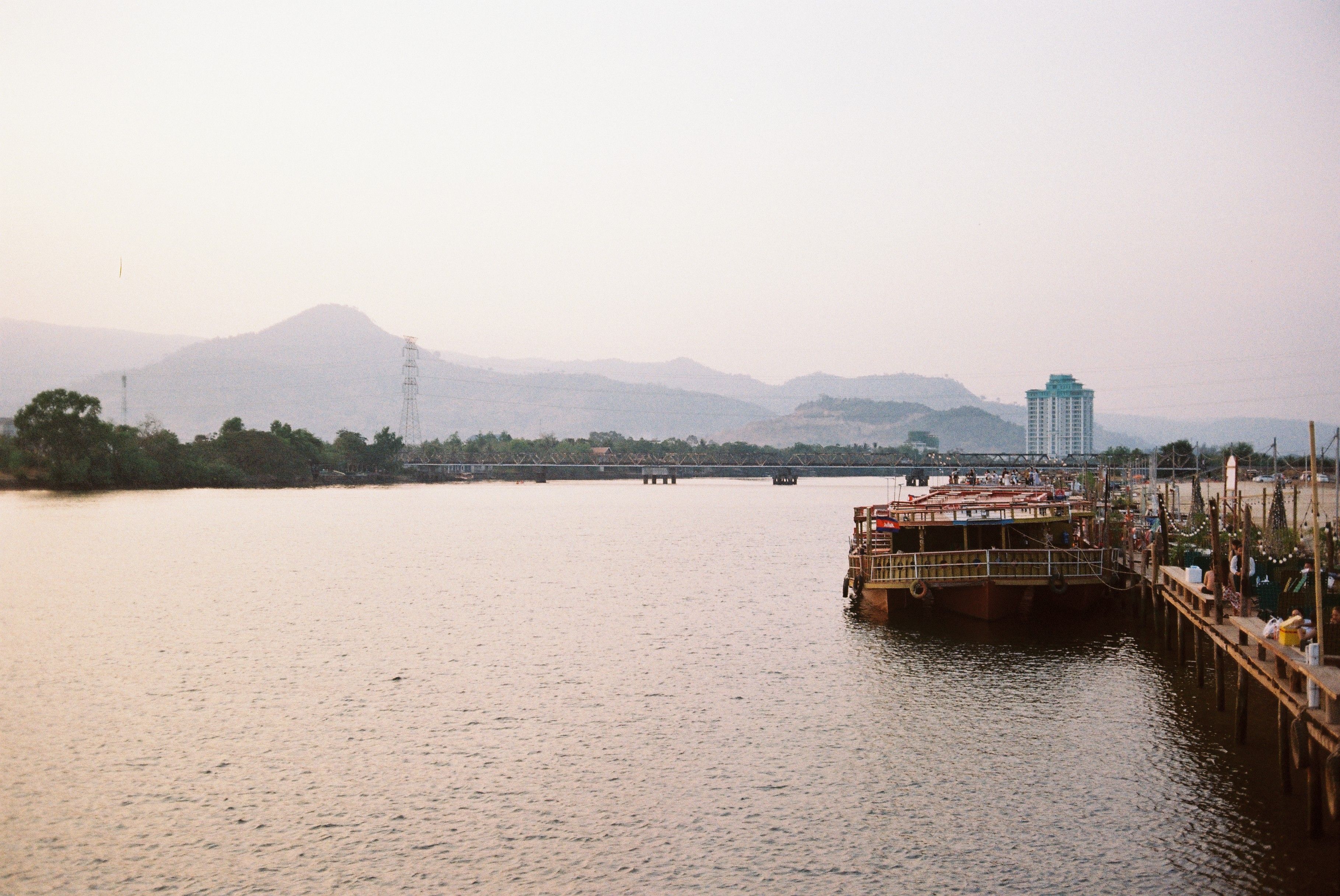
Kampot & the south coast
Pepper plantations on red soil, a river that flows slowly to the sea, and islands offshore where evening falls early and nothing needs to happen.
Looking past the highlights
Why we look at Cambodia differently
Beyond the headline temple Angkor Wat is one temple among more than a thousand. We plan around the times and the places the crowds don't reach, not around them.
History entrusted, not imposed The Khmer Rouge period is given space if a traveller asks for it, told by someone who lived through it or inherited it, never as a compulsory stop.
The water decides the route The Tonlé Sap grows and shrinks with the season, changing which villages are reachable. We plan with that rhythm, not against it.
Stillness as a destination A temple with no one else in it, a village meal with no programme, an afternoon on an island with no wifi. To us that's just as much Cambodia as the familiar images.

People & faith
A country that begins its morning with an offering
In every village the pagoda sets the rhythm: early each morning, monks in orange robes walk past the houses on their alms round, a custom that has nothing to do with tourism and continues whether visitors are there or not.
Buddhism here is not a backdrop but a daily practice: in the incense at every market, in the small shrines beside the road, in the calm with which people talk about what the country has endured. That resilience stands out without anyone dwelling on it.
Nature & water
Rainforest, lake and river
Cardamom Mountains
Untouched rainforest where elephant trails and gibbon calls are the only sound, and where the protection of the area shows in what doesn't happen: no logging, no roads.
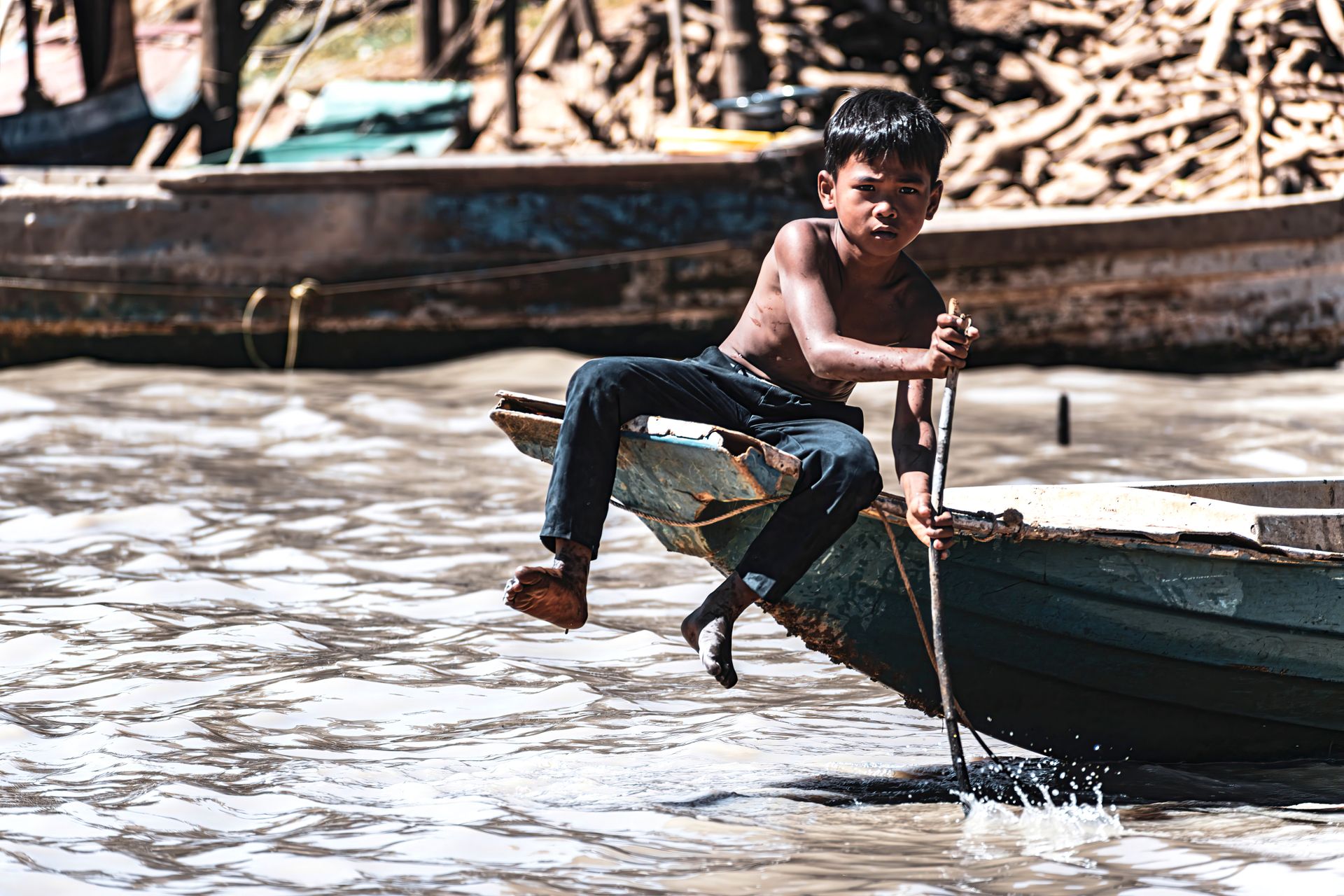
Tonlé Sap
Floating villages that shift with the water level, with houses, shops and churches on rafts, and a life that revolves entirely around the lake.

The Mekong at Kratie
Shallow rapids where the rare Irrawaddy dolphin can still be found, seen from a quiet wooden boat rather than a motorboat full of people.

Food
A cuisine that goes far beyond amok
Amok, the creamy fish curry steamed in banana leaf, is the dish everyone knows, but Cambodian cuisine runs deeper: prahok, the fermented fish paste that flavours almost every dish, kampot pepper that tastes different fresh and green from how it tastes dried, and the night markets of Phnom Penh and Battambang where the real eating happens.
Cook alongside a family on the Mekong, or visit a market with someone who knows where to look, and you'll taste a cuisine that rarely makes it onto a menu abroad.
What's possible
Cambodia the way you want to experience it
No fixed programme. Just a handful of experiences that show what Cambodia has to offer, as a starting point for a trip we design together with you.

Temples at first light
Arrive at Ta Prohm, or the remote Banteay Chhmar, before the first rays of sun fall through the roots, well ahead of the coaches.
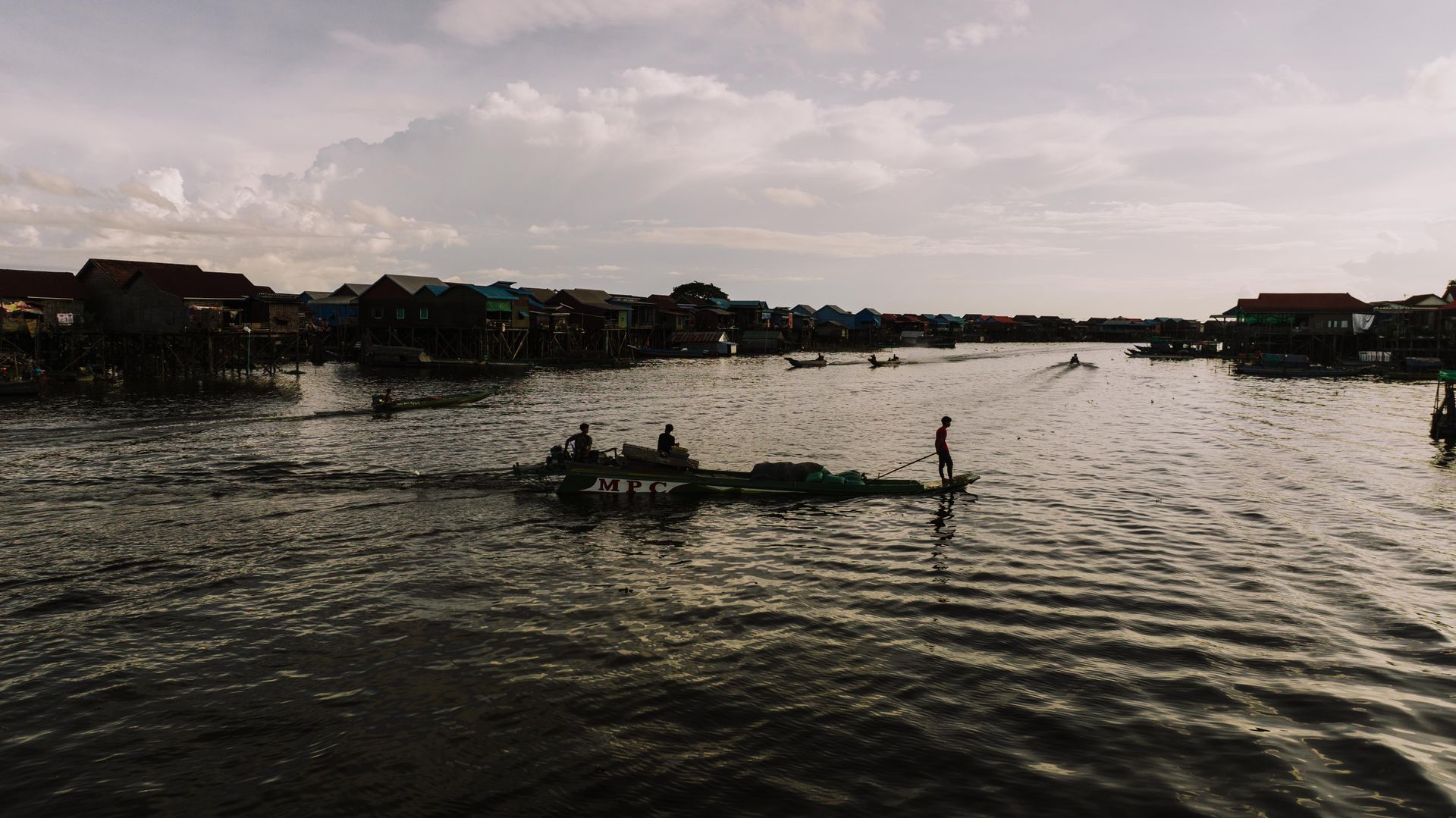
By boat through a floating village
Visit a community on the Tonlé Sap by boat that shifts with the water level, guided by someone who grew up there themselves.

Dinner with a family on the Mekong
Cook and sit down with a family in a village outside Kratie or Kampong Cham, with no tourist trappings.

Weaving silk on Koh Dach
On the so-called 'silk island' off Phnom Penh, watch thread on a hand loom become a sarong, a craft still passed from mother to daughter.
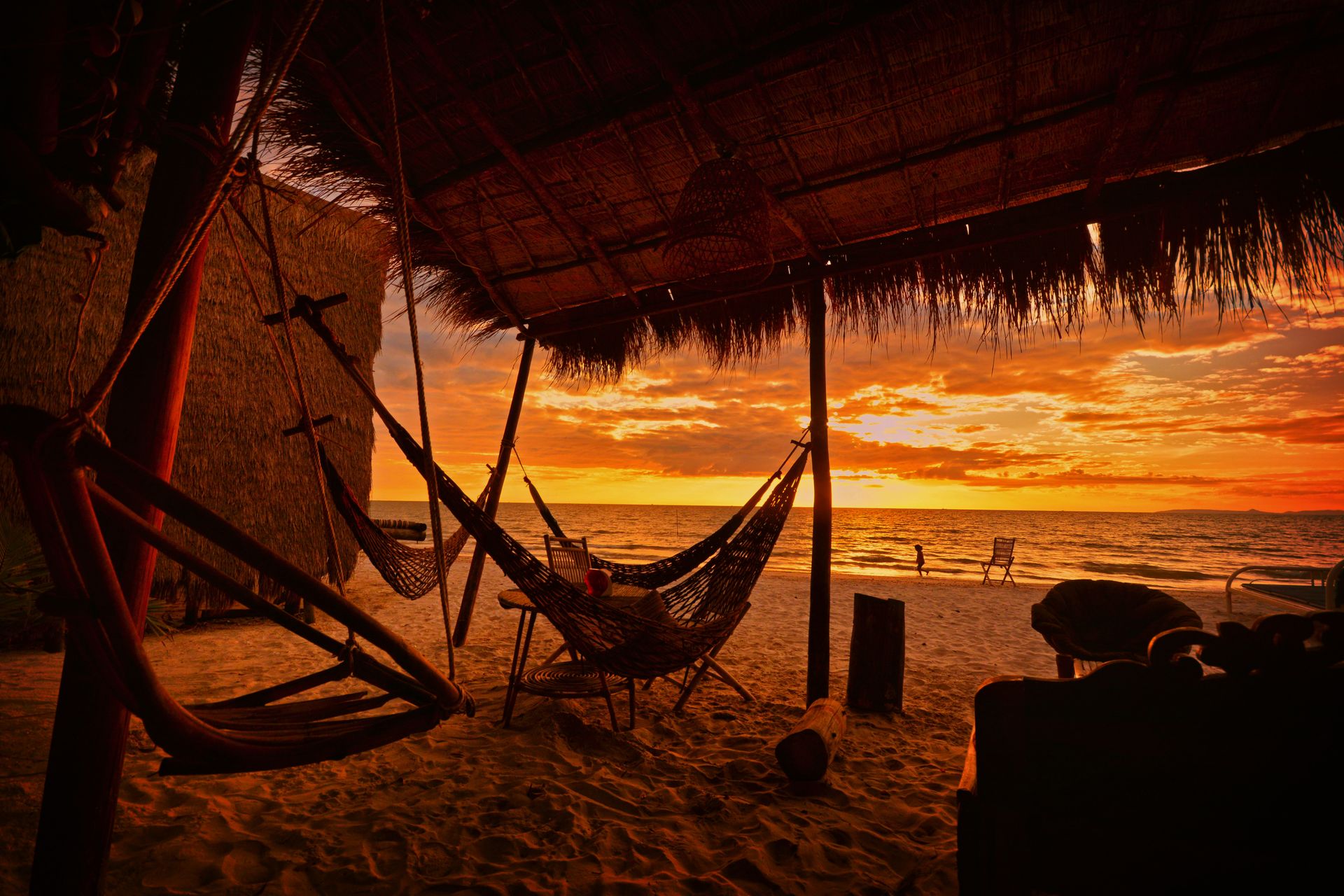
Days with no plan on the islands
Off the coast at Kep or Sihanoukville, set aside a few days where nothing needs to happen: a hammock, a boat, nothing more.
Where your route goes depends on what you're after: temples, water, stillness, or all three.
When would you travel?
When to travel to Cambodia
The dry season runs from November to April, with the coolest and most pleasant months from December to February. March and April turn noticeably hotter, well above thirty degrees.
From May to October the rain falls, usually in heavy, predictable showers at the end of the day. The Tonlé Sap swells and the landscape turns a deep green. For those who don't mind that, Angkor is quieter and the rice paddies are at their best.
Jan
Feb
Mar
Apr
May
Jun
Jul
Aug
Sep
Oct
Nov
Dec
Top: dry, cool and pleasant, the busiest months at the temples.
Good: dry but warmer, or right at the transition to the green season.
Fair: rainy season with daily showers, fewer visitors, a lusher landscape.
Worth knowing
Practical, without the noise.
Practical, without calling it simple.
- Getting there
- Flights via Bangkok, Singapore, Doha or Istanbul; both Siem Reap and Phnom Penh have an international airport.
- Visa
- An e-visa can be arranged online in advance, or a visa on arrival at the larger airports.
- Health
- Malaria prevention is advisable outside the cities; make sure standard travel vaccinations are up to date before departure.
- Pace
- Expect heat, dust and sometimes slow roads off the main routes between Siem Reap, Phnom Penh and the coast.
- Getting around
- Domestic flights and bus connections between the regions, short hops by tuktuk or bicycle within the cities.
Cambodia doesn't survive despite its history.
It lives on with it, every morning again.

Ta Prohm, a quarter of an hour before the first coach arrives.
Frequently asked questions
Is Cambodia suitable as a first trip to South-east Asia?
Certainly, provided the pace is right: the infrastructure is simpler than in Thailand or Vietnam, and that's exactly what makes it an honest introduction.
Do you combine Cambodia with other countries?
Regularly, with Vietnam, Laos or Thailand, either as a connecting leg or as two destinations within one trip, tailored entirely to you.
How do you handle the history of the Khmer Rouge?
With respect and only on request: we make space for it if a traveller wants that, told by a local guide with personal or family experience, never as a compulsory stop.
Is it good to travel there all year round?
Yes, with a different mood each season: dry and busier from November to April, greener and quieter during the rainy months.
Or perhaps this
Other destinations
Still weighing it up? That is no problem at all. The right country often only becomes clear once the conversation starts.
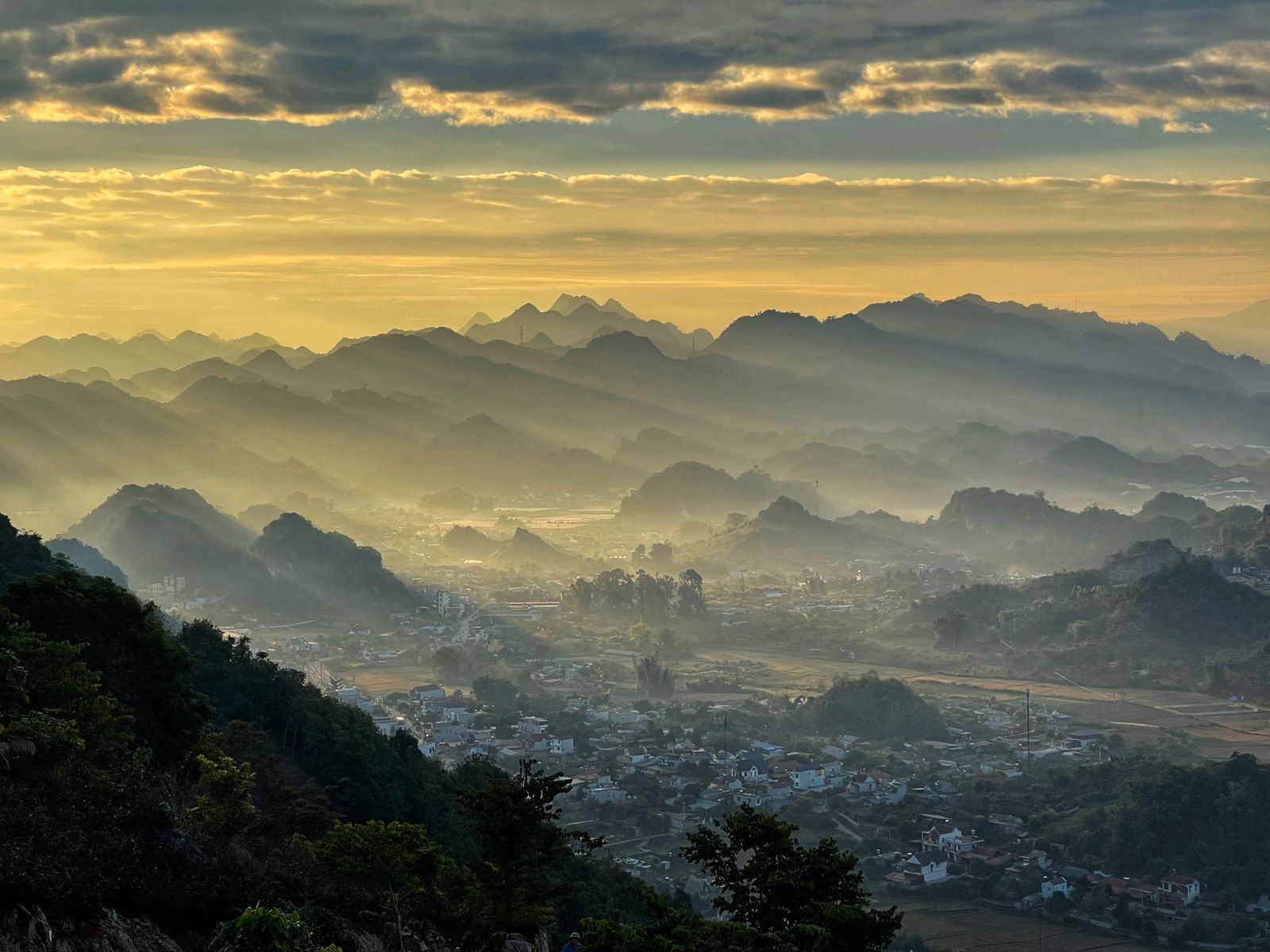
South-East Asia
Vietnam
A country best discovered at the table, one that feels like an almost different place from north to south.
South-East Asia
Laos
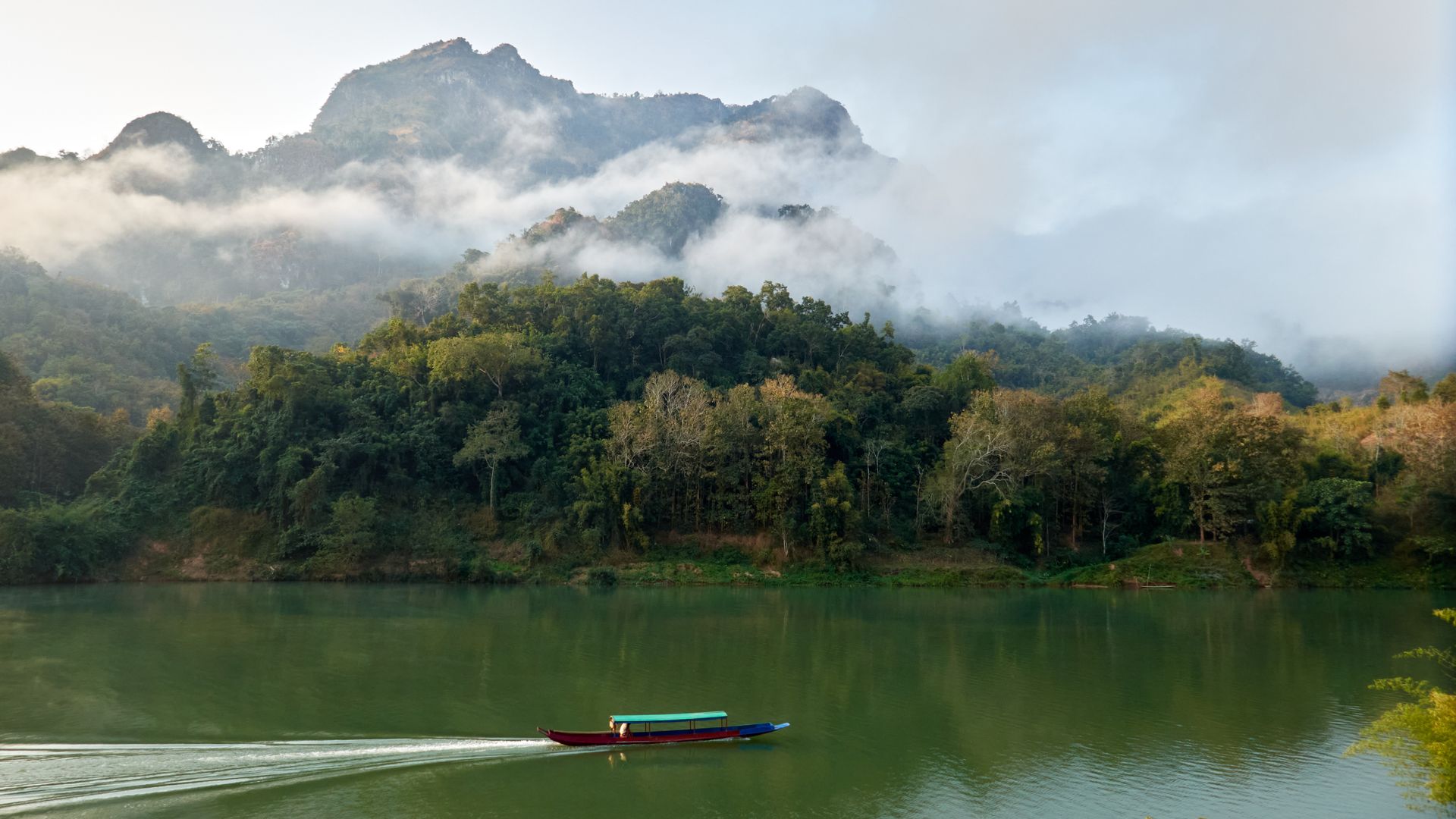
Time still flows with the river here, at a pace its neighbours traded for haste long ago.
South-East Asia
Thailand
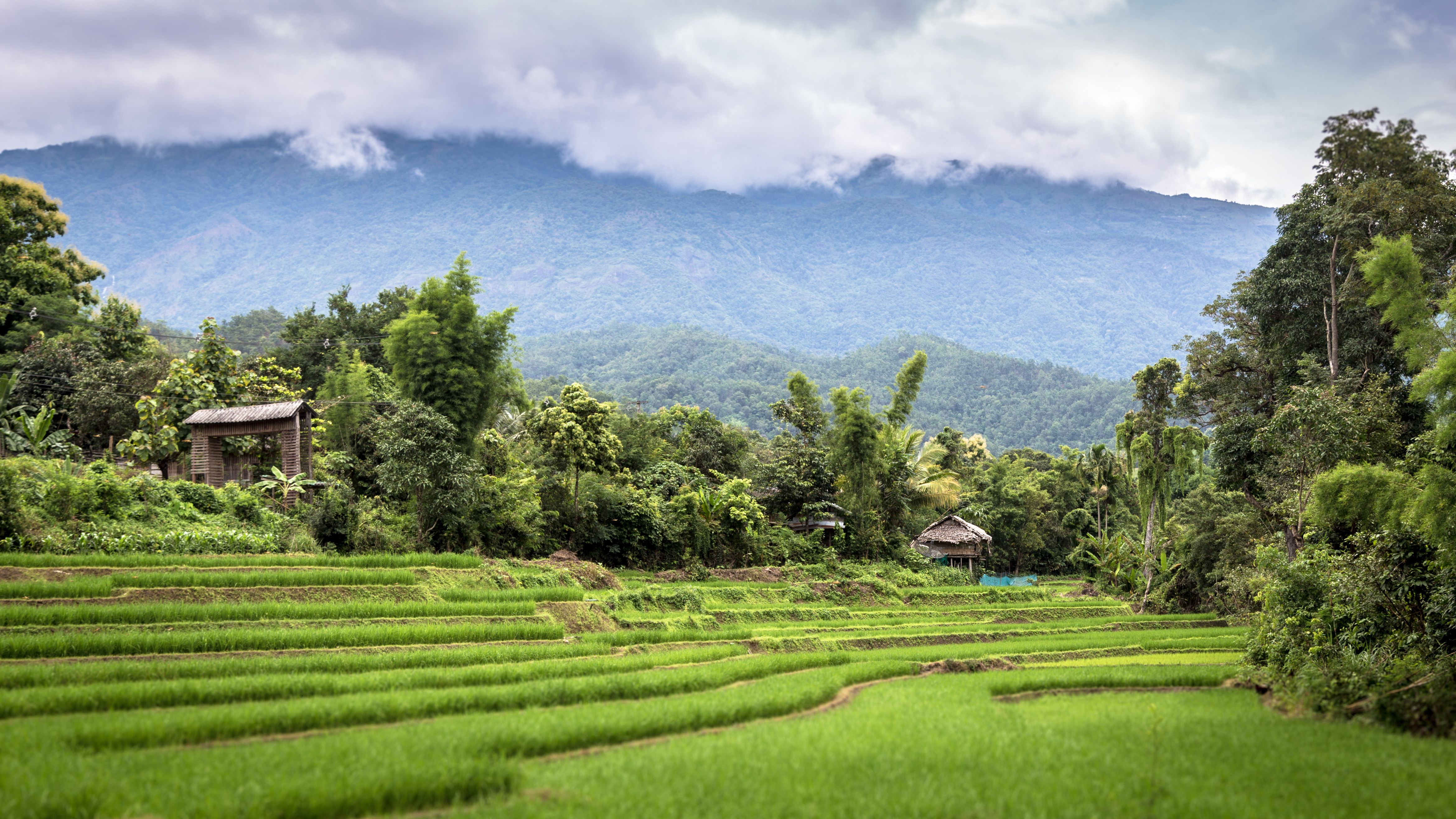
From busy Bangkok streets to quiet mountain villages in the north, this country has as many faces as it has provinces.
How it works
This is how your journey to Cambodia takes shape.
Six steps, from your first story to your homecoming. The conversation and the feasibility check cost you nothing.
-
01
Tell us your story
Fill in the form or give us a call. You do not need a route yet: a country, a period or just an idea is enough.
-
02
The conversation and the check
We talk through what you are looking for, by phone or by video, and check whether it can be done. If it can, we set down together what we will make for you.
-
03
We design your journey
We build your programme up, day by day, together with our own people in the country itself.
-
04
Your proposal
You read your journey day by day, with everything that is included. You say what you would like differently, until it is right.
-
05
Ready to depart
You send us your details, we send you your travel documents. You have one fixed contact who knows your journey.
-
06
Travelling, and after
Your contact stays reachable while you are away. Once you are home, we call one more time.

The next step
How do you picture Cambodia?
Temples at first light, an afternoon on the Tonlé Sap, days with no plan on an island. Tell us what you're looking for and we'll map out a route to match.