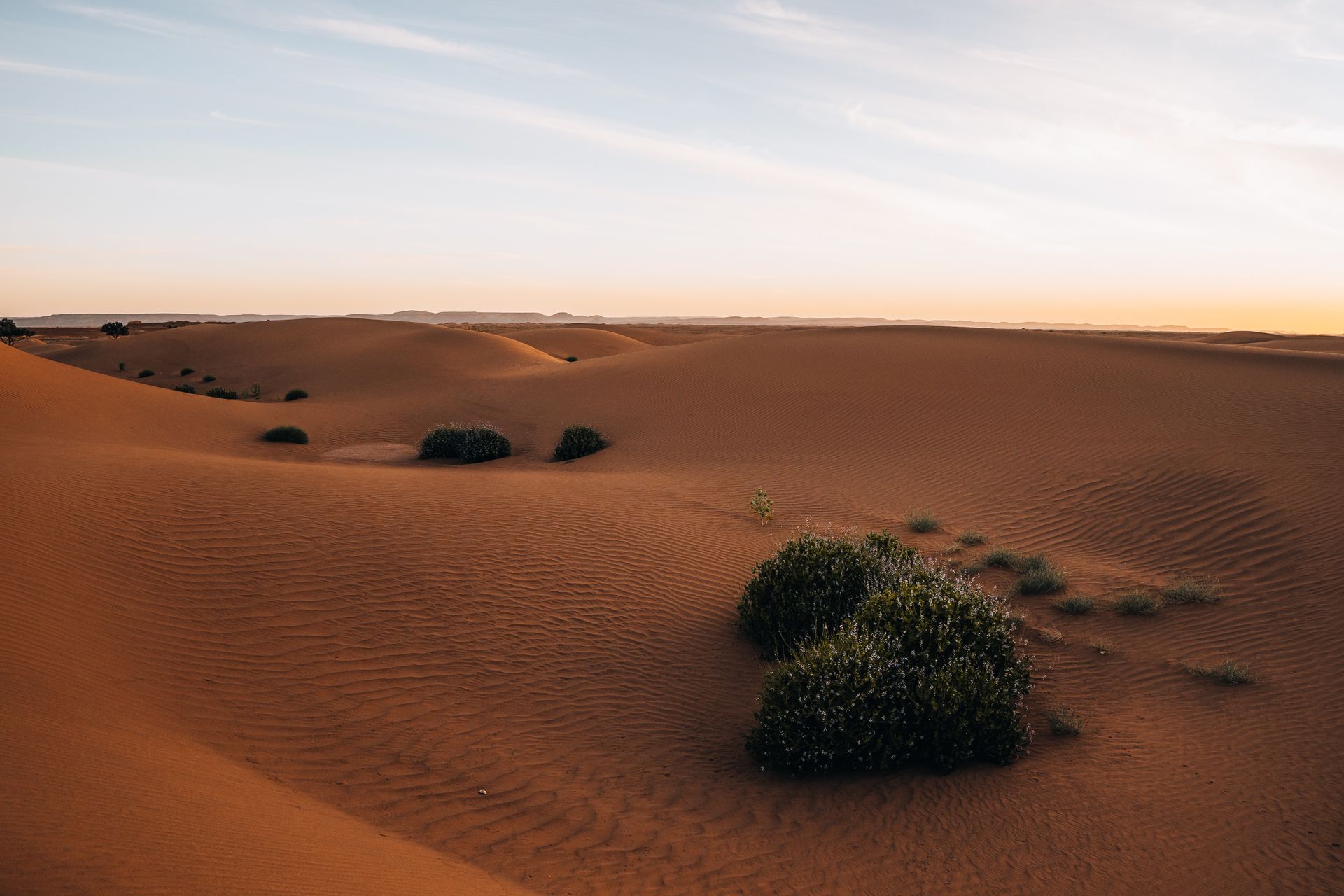
Maghreb, North-West Africa
Morocco
From the edge of the dunes to cedar forest, without ever feeling like you've crossed into another country.
This is Morocco
Desert, mountains and coast lie a few hours' drive apart, and the cities are every bit their match.
Three landscapes within a single day's drive of each other.
Drive two hours south from Marrakech and the city's red earth turns to mountainside. Drive another two hours and it becomes dune. That same morning could have begun with snow on a mountain pass above two thousand metres. Morocco is a country that refuses to be captured in a single landscape, and the same holds for its cities: Fez, where tanneries have worked the same stone vats for nine centuries, has little in common with Essaouira, where fishermen build their boats against a wind that never quite settles.
What stands out about Morocco isn't the distance between these worlds, but how small it turns out to be. A guide driving through a cedar forest in the Atlas in the afternoon can have you at a table in a riad with a courtyard and fountain that same evening. The transition doesn't feel rushed. It's simply how tightly this country fits together.
The regions
Five landscapes, no two skies alike
Morocco is often reduced to Marrakech and the desert, but the country stretches from a Mediterranean coastline to an Atlantic one, cut in two by a mountain range.
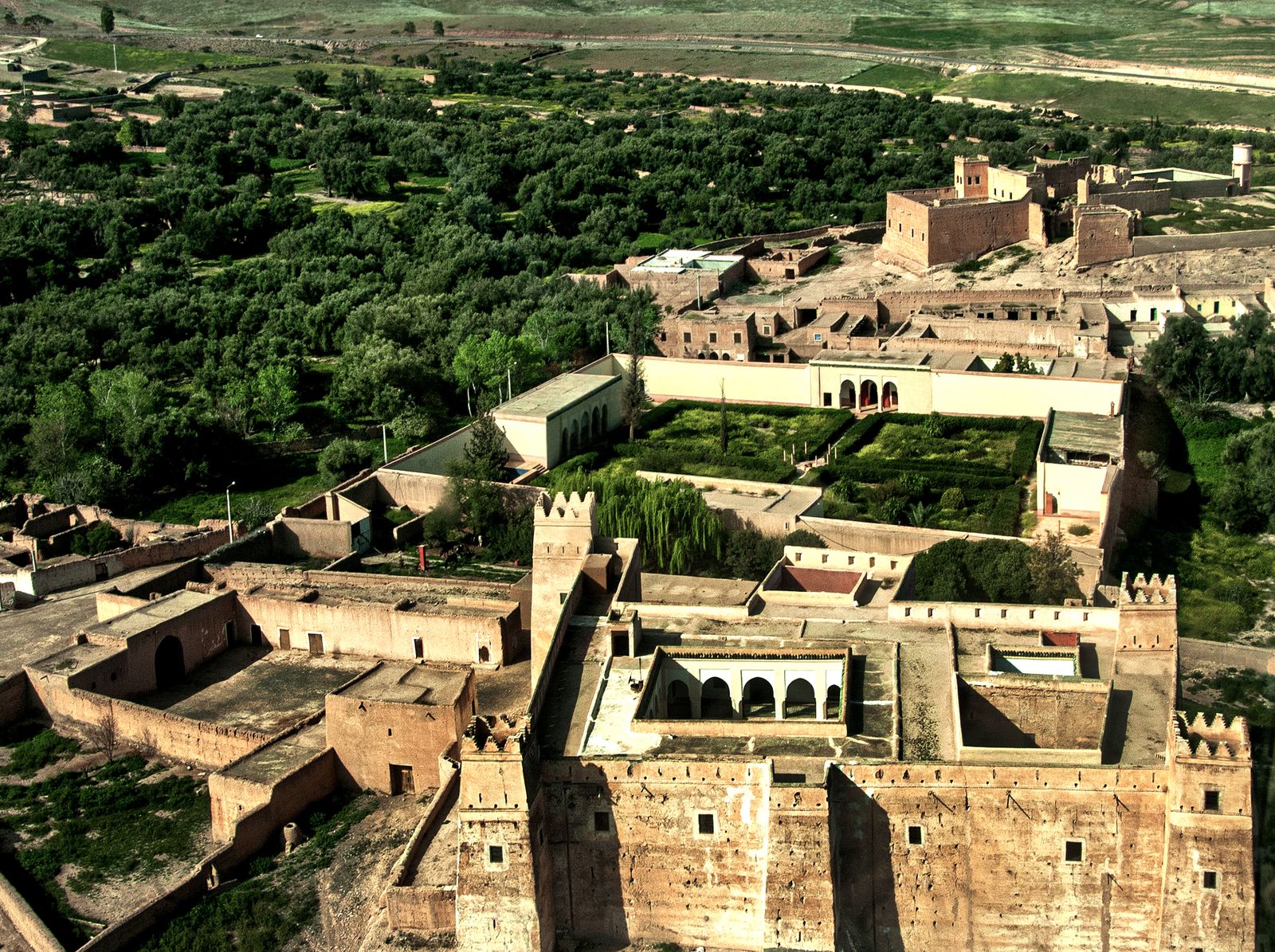
Central, at the foot of the mountains
Marrakech and the High Atlas
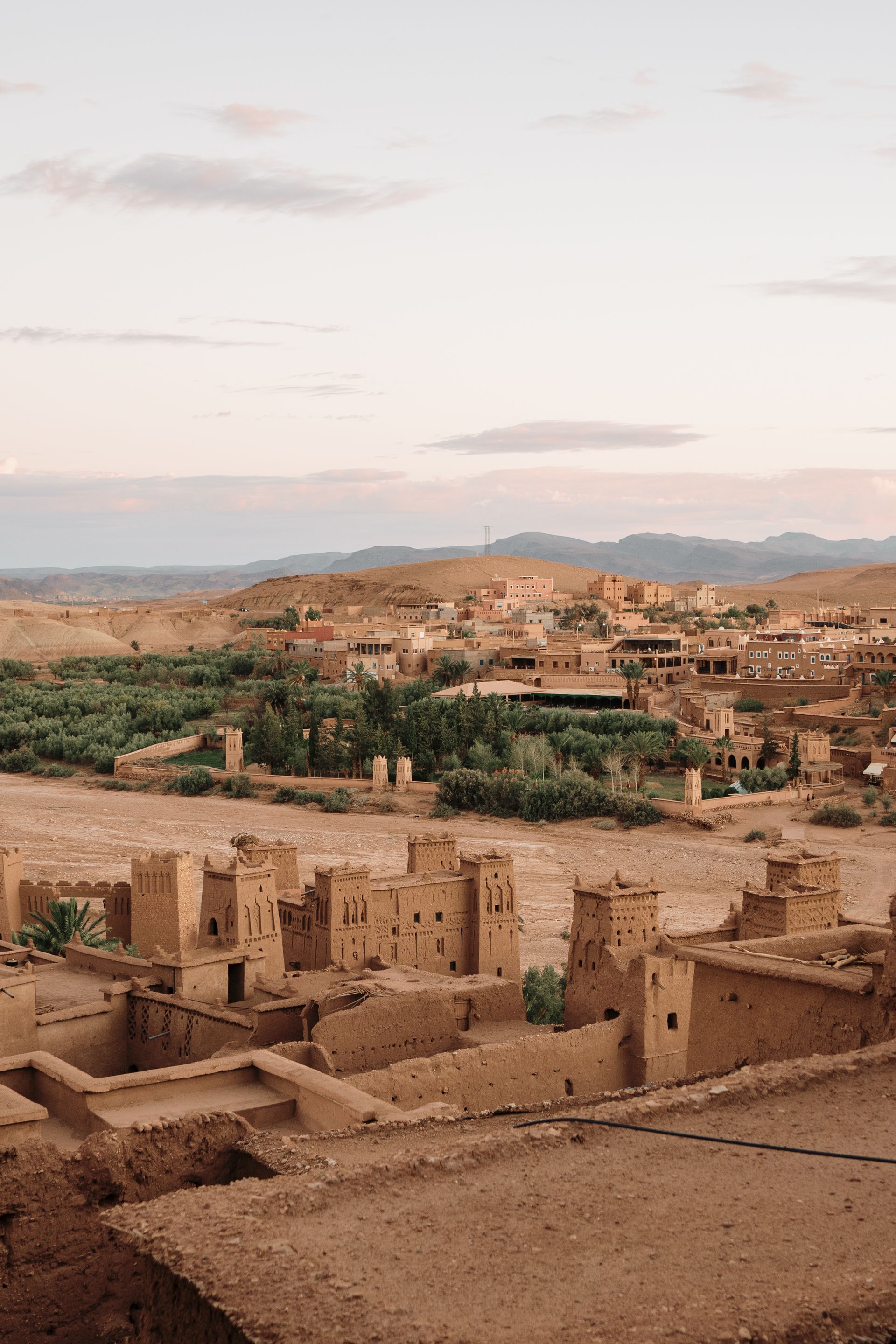
The ochre walls of the medina lie barely an hour from mountain villages where snow lingers into April. After a few days in the city, head into the Ourika or Imlil valley and trade the bustle of Jemaa el-Fnaa for mule tracks and mudbrick houses against the slope.
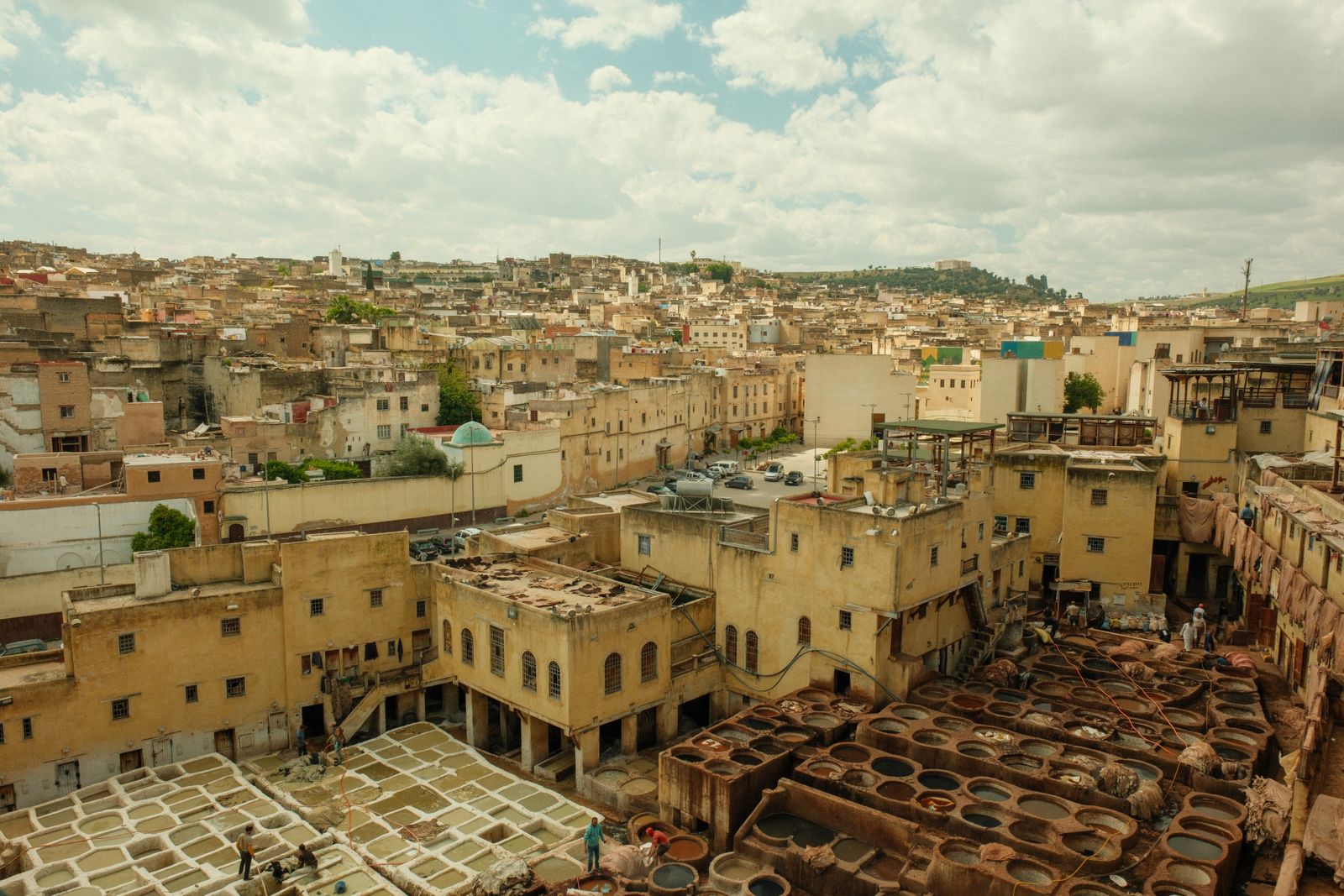
North-central, the imperial cities
Fez and Meknes
Fez el-Bali is one of the largest car-free urban centres in the world, with tanneries, coppersmiths and a university older than most in Europe. Meknes, an hour away, is quieter and less visited, with imposing gates from the era of Sultan Moulay Ismail.
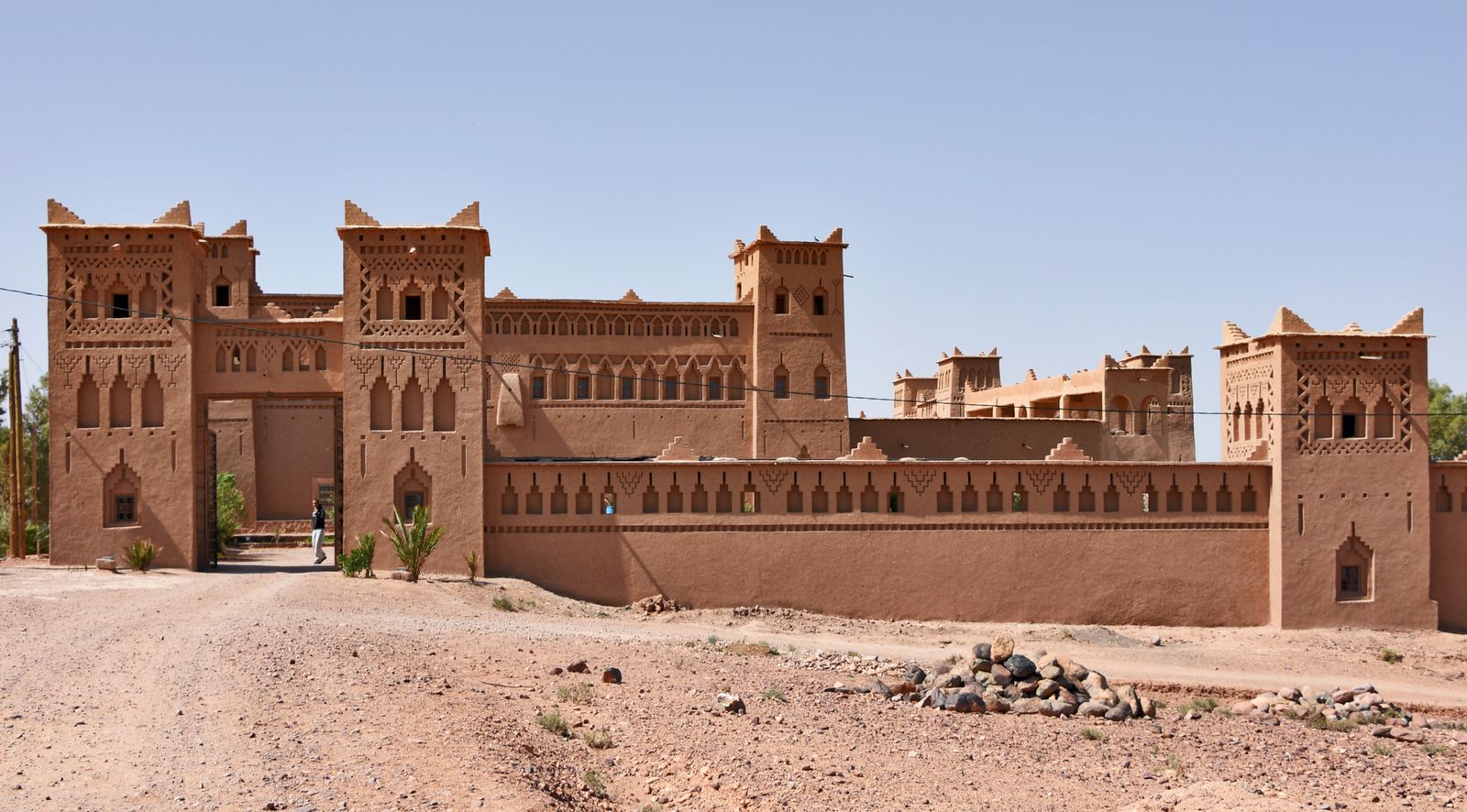
South-east, beyond the mountain passes
The edge of the Sahara
Past the Tizi n'Tichka pass, the landscape turns into rammed-earth kasbahs and palm groves along the Draa valley, until the road runs out at the dunes near Merzouga or Erg Chigaga. Rarely does a mountain pass lie so close to a sand dune.

West coast
The Atlantic coast
Essaouira is built for the wind: blue fishing boats, walls that break the surf, a medina that feels calmer than Marrakech's. Further north lie Oualidia with its oyster farms and Asilah with its whitewashed streets.
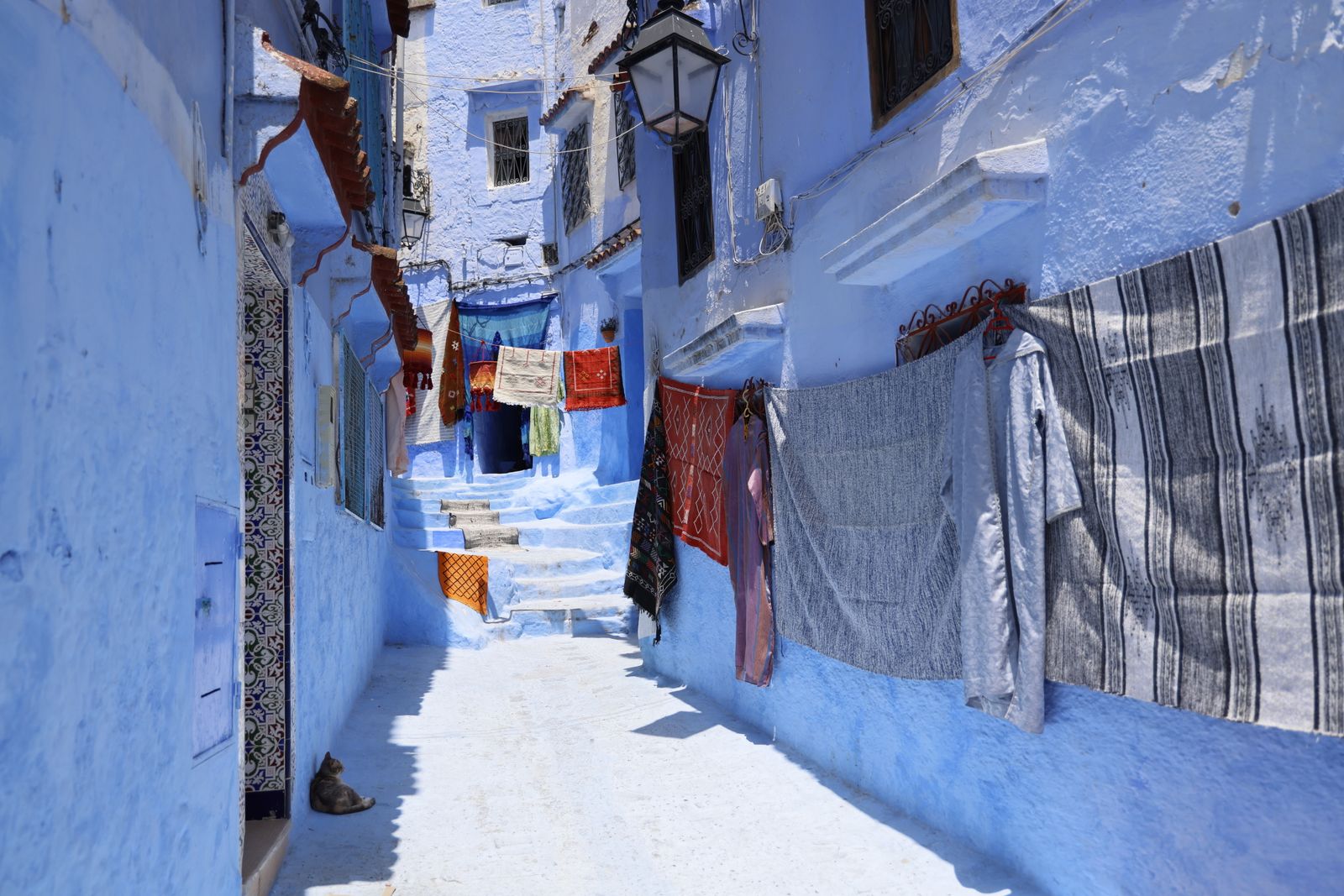
North
The Rif and Chefchaouen
Chefchaouen, its blue-painted medina set against the mountainside, is the best-known face of the Rif, but the mountains behind it, with the Talassemtane range and cedar forests, see few visitors. Smaller, greener and less hurried than the south.

South-west
Anti-Atlas and the Souss valley
Around Taroudant and Tafraoute the landscape turns rocky and still: argan trees with goats climbing them, rock formations that turn pink at sunset, almond blossom in February. Morocco without the crowds of the better-known routes.
Landscape
Three geographies rarely seen in the same frame
Desert, mountains and ocean are often sold elsewhere as separate destinations. In Morocco, they're neighbours.
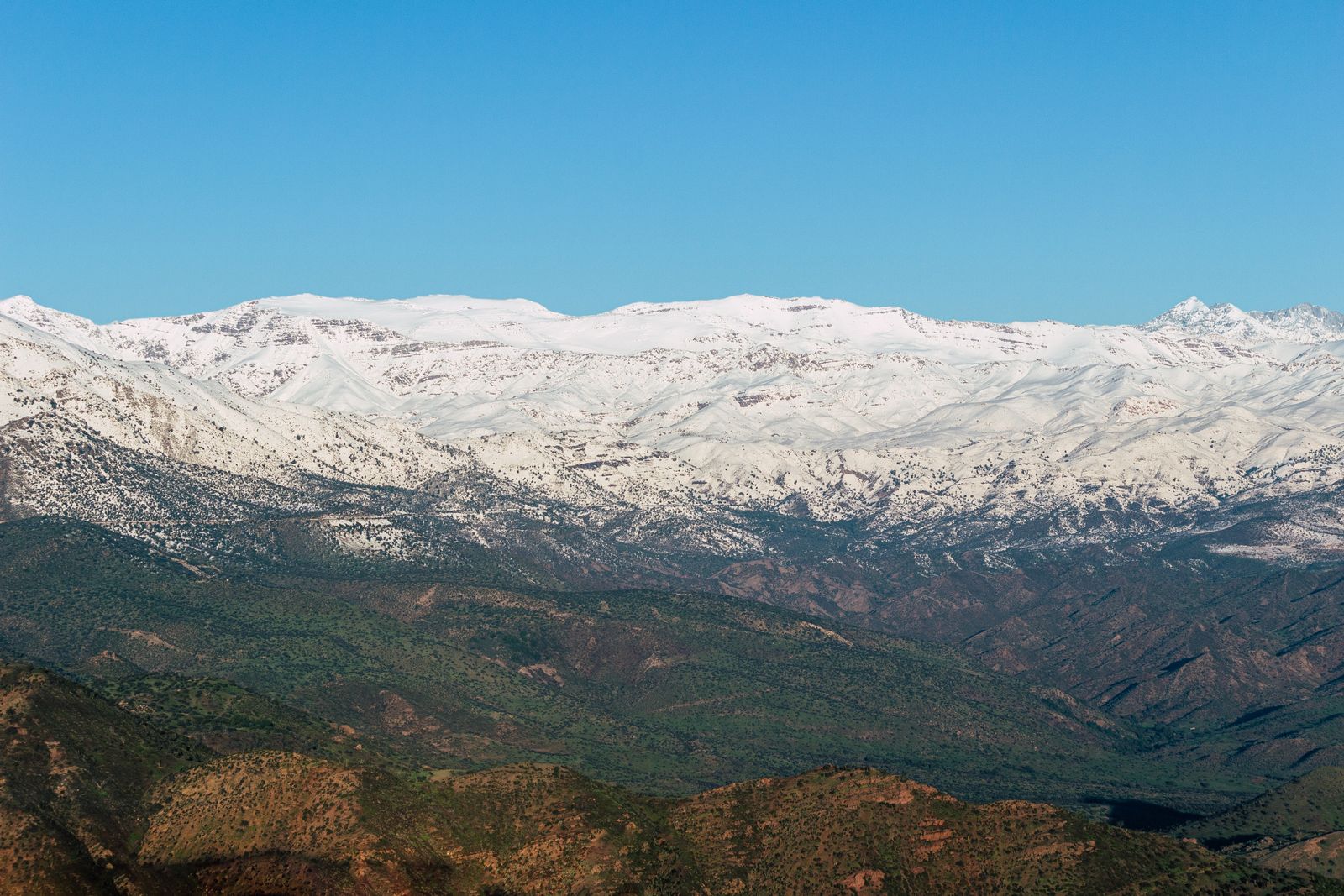
The High Atlas
Toubkal, North Africa's highest peak at 4,167 metres, draws walkers, but the valleys around it are just as rewarding: terraces, walnut trees, villages reachable only on foot.
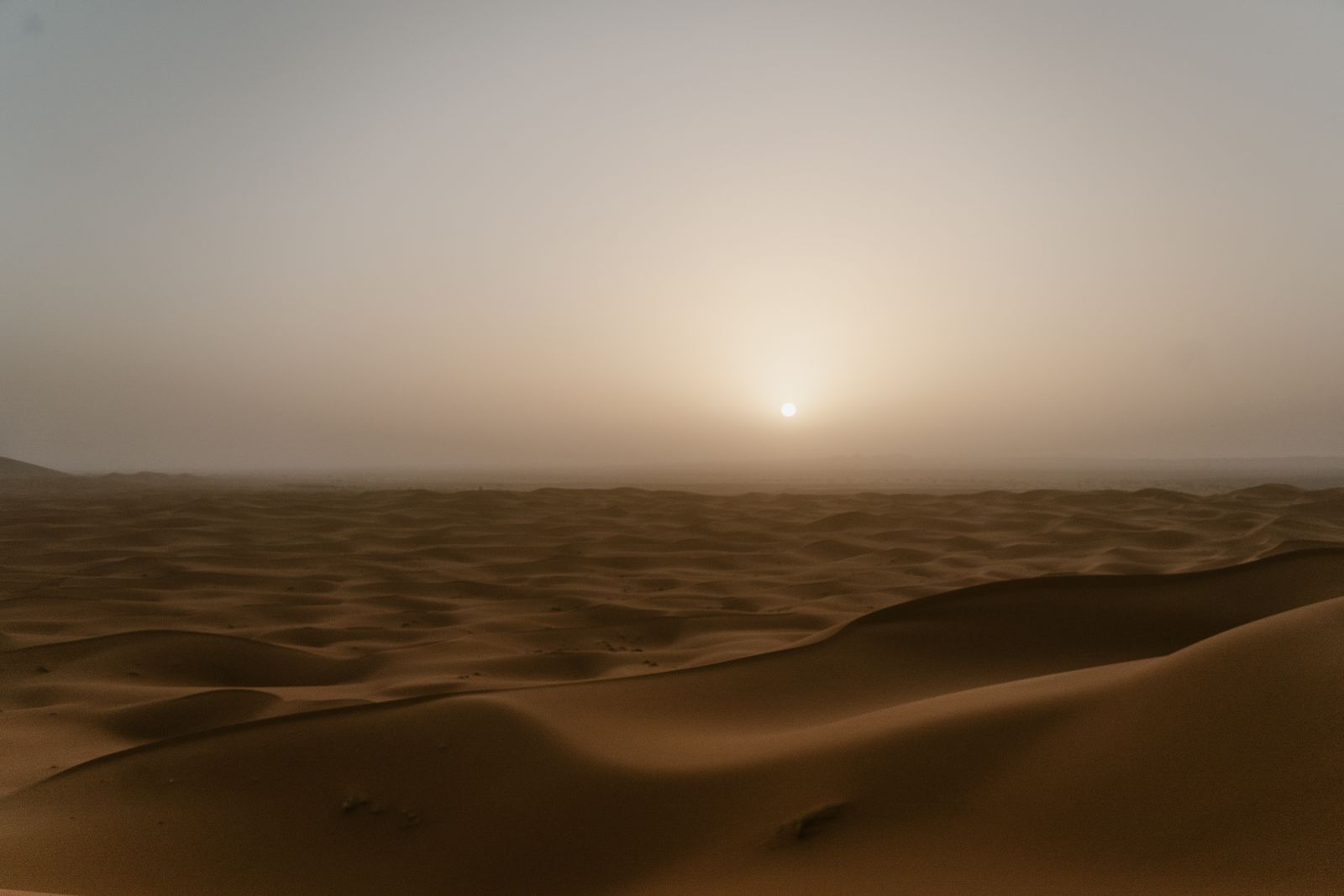
The Sahara
East of Merzouga and south of Zagora, the ergs begin: dune fields that deliver a night sky you won't see anywhere left in Europe. By day it's the silence that strikes you, not the heat.

The Atlantic coast
From Sidi Ifni to Asilah, cliffs, wide beaches and fishing villages alternate. The wind that defines the coast also makes spots like Taghazout and Essaouira appealing to anyone who'd rather surf than sunbathe.

People and makers
A craft practised daily, not staged for visitors
In Fez, a tannery has stayed in the same family for generations; in the Atlas, a Berber woman weaves a carpet to a pattern learned from her mother, not from a manual. That distinction, between what's done for visitors and what simply happens, with or without an audience, is where Morocco sets itself apart from destinations where the 'authentic' has become an attraction.
Our local expert works with guides who come from the region they show: a muleteer from the Ourika valley, a driver who knows the mountain passes as well in snow as in sun, a riad owner in Fez who seats her guests at the same table as her family. A difference you feel in the pace of a conversation, not in a brochure.
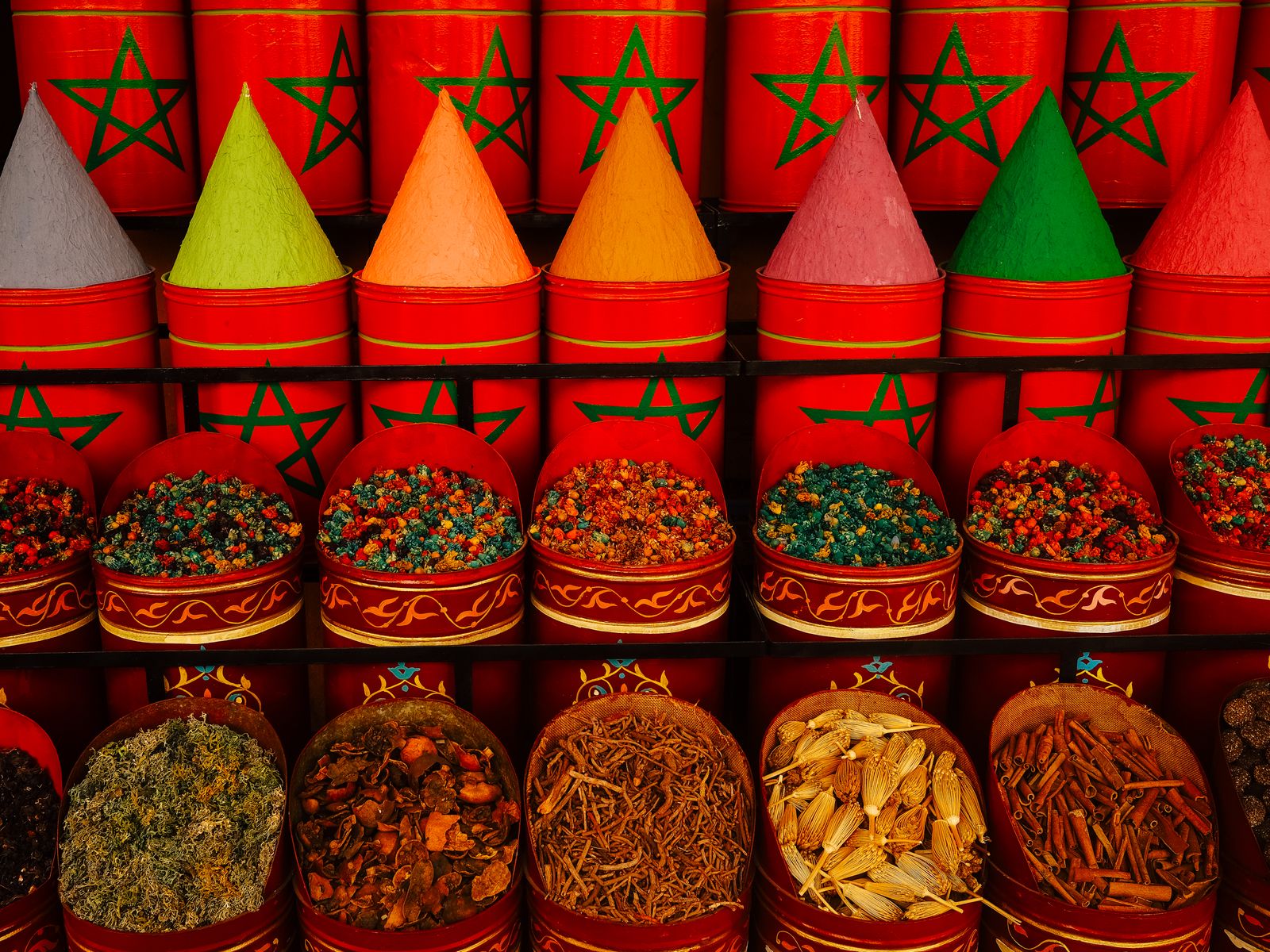
At the table
Tajine is the beginning of the story, not the end
A tajine in Marrakech is rarely the same as one in Fez: the first leans sweet, with dried fruit and almonds, the second stays spicier and saltier. Tanjia, meat slow-cooked in a clay pot, is a Marrakech speciality you'll rarely find on a menu elsewhere. Pastilla, filo pastry, poultry, almonds and cinnamon, belongs to Fez.
On the coast the picture shifts entirely: grilled sardines in Essaouira, oysters straight from the beds in Oualidia. And everywhere, from the smallest tea shop to the grandest restaurant, the same ritual returns: mint tea, poured from height, offered three times before you're allowed to refuse.
What you can do here
More than a sunset camel ride
Morocco suits both those who want to stay active and those who mainly want to slow down, often within the same trip.
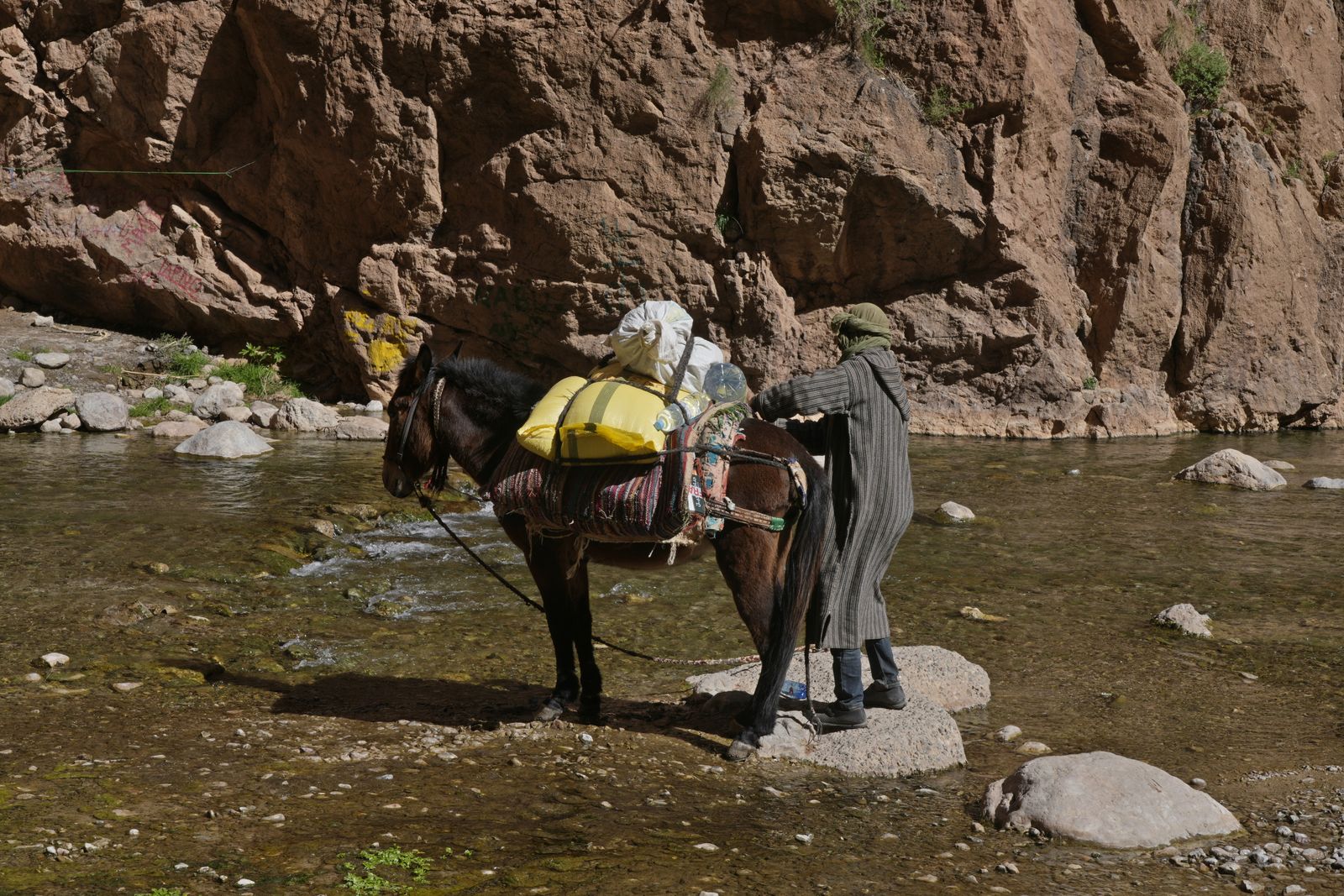
Trekking the High Atlas
Village to village with a local muleteer, staying with host families rather than in a tented camp.

A night with a desert family
Beyond the tourist camps near Merzouga lie smaller, family-run camps where the number of guests can be counted on one hand.

Working alongside a craftsman in Fez
Half a day in a leather workshop or a ceramics studio, not as a demonstration but as a genuine working session with the craftsman himself.
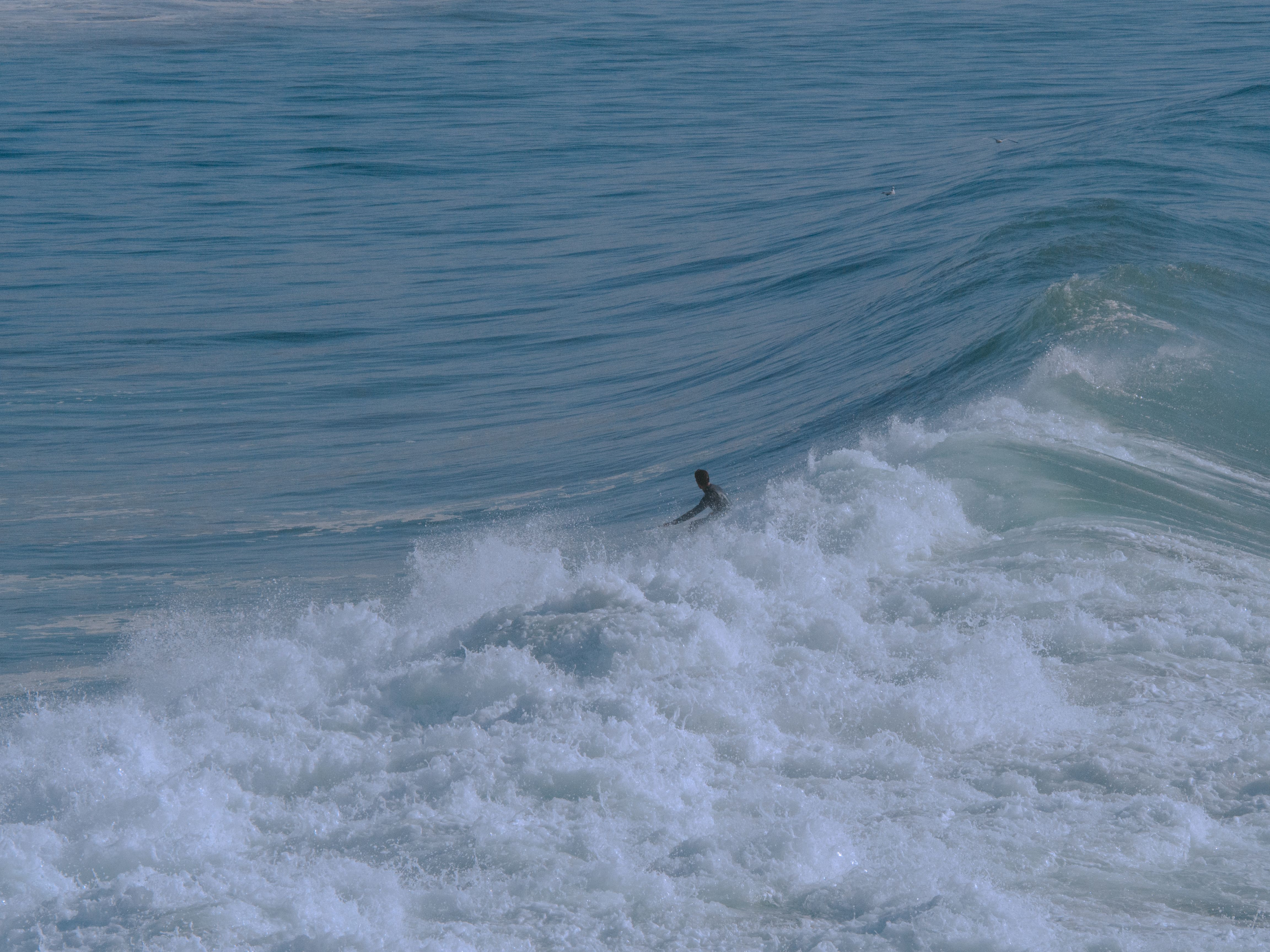
Surfing and yoga on the Atlantic coast
Taghazout and the bays around it offer waves for beginners and experienced surfers alike, at a calmer pace than Marrakech.
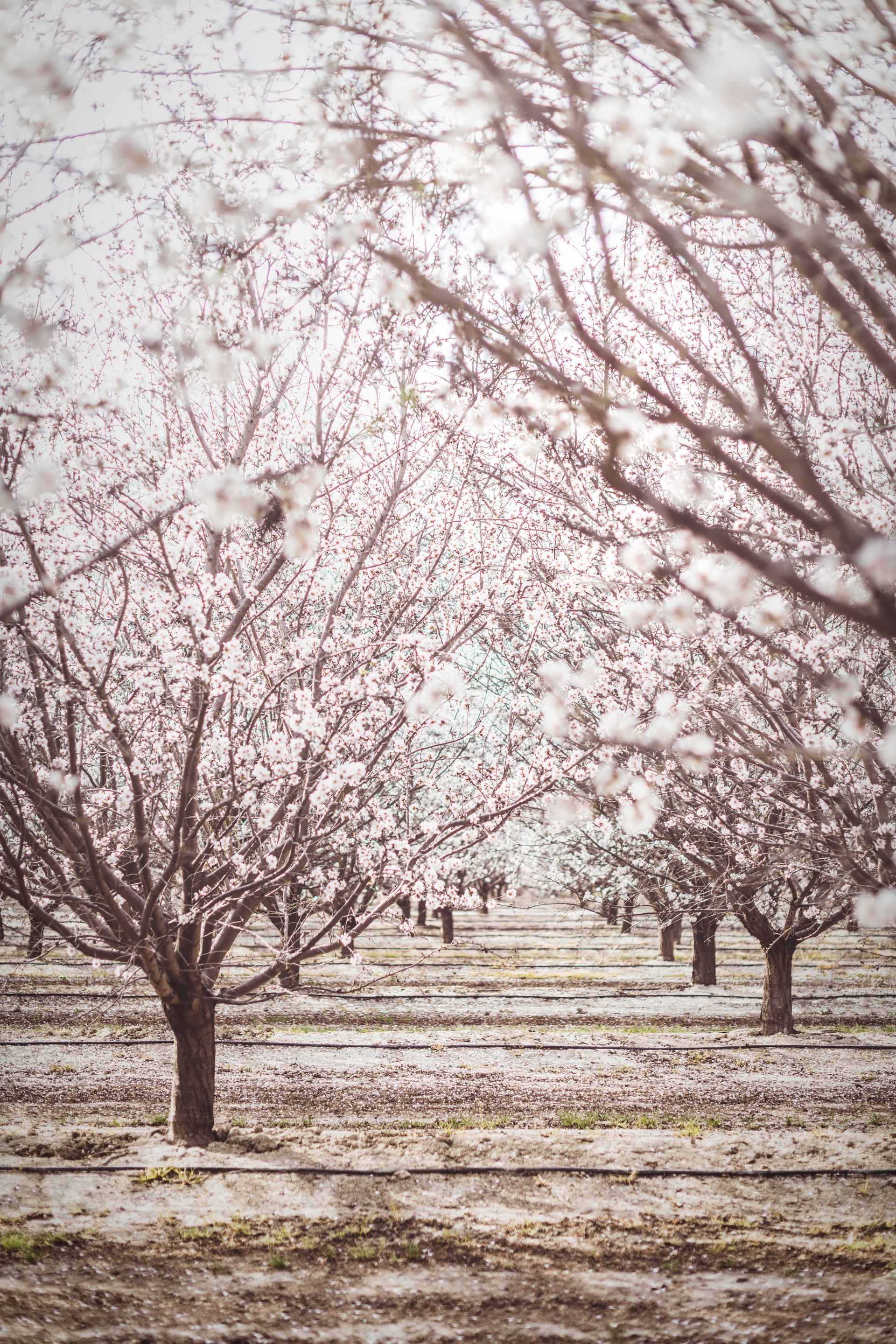
Almond blossom in the Anti-Atlas
In late February, the valley around Tafraoute turns white and pink. A moment few foreign visitors know about.
None of these experiences stand alone. They only take on meaning in the order and pace of a trip built around you.

The N9 between Marrakech and Ouarzazate climbs over the Tizi n'Tichka pass, more than 2,200 metres high. The shortest road between the country's two worlds.
When would you travel?
When you go shapes your trip more than where you go
Morocco has no single season. It has at least three, depending on where you are. Summer is scorching inland and in the desert, with temperatures in Marrakech and Zagora well above forty degrees; on the Atlantic coast the wind keeps things pleasant instead. Winter brings snow to the High Atlas and cold nights in the Sahara. By day, it can still be sunny and mild.
Spring and early autumn are the easiest: mild enough for the mountains, not yet too hot for the desert, and the almond trees already blossoming in the south-west by late February.
Jan
Feb
Mar
Apr
May
Jun
Jul
Aug
Sep
Oct
Nov
Dec
Top: spring (March to May) and autumn (September to October), mild in the mountains, still pleasant in the desert.
Good: February and November, with a chance of cold mornings but still sunny by day.
Fair: summer is hot inland (the coast remains an alternative), winter brings snow to the mountains and cold nights in the desert.
Looking past the highlights
Why we don't treat Morocco as one single destination
No three-day medina tour Cramming Marrakech, Fez and the desert into one week mostly means time in the car. We prefer to build a trip with fewer moves and more time in each place, so a mountain village becomes a destination in itself rather than a stopover.
Drivers who know the mountain passes The Tizi n'Tichka and Tizi n'Test are spectacular but unpredictable in snow or fog. Our drivers work those roads all year round and adjust the route when the weather calls for it.
Hospitality is not an attraction A meal with a host family in the Atlas isn't a staged 'cultural experience'. It's a family inviting you to their table. We only plan those moments where the relationship with the host already exists, not because it looks good on an itinerary.
Outside peak season is a different Morocco In November, Jemaa el-Fnaa is still lively, but without April's crowds. Anyone flexible on timing sees a quieter country without losing anything in landscape or light.
Worth knowing
Practical, without the noise.
A few things that make planning easier.
- Getting there
- Direct flights from Brussels to Casablanca and Marrakech; getting around the country is usually done with a private driver, given the distances and mountain roads.
- Documents
- A passport valid for at least six months after your return date; Belgians don't need a visa for a short stay.
- Health
- No mandatory vaccinations; better to avoid tap water outside major hotels, bottled water is available everywhere.
- Pace
- Allow for longer drive times through the mountain passes. The country rewards those who build in time between regions instead of moving every day.
- Clothing and climate
- Even in summer, nights cool sharply in the desert and mountains; an extra layer is never wasted.
Morocco isn't one trip with three stopovers.
It's three landscapes that happen to share a border.
Frequently asked questions
Is Morocco suitable for driving yourself?
The main roads are well maintained, but the mountain passes call for experience and local knowledge, especially in winter. Most travellers combine a private driver for the mountain routes with more freedom in the cities and along the coast.
How hot does it get in the Sahara?
By day it can climb above forty degrees in summer, while winter nights can dip just below freezing. Spring and autumn offer the most comfortable middle ground.
Is a week enough for Morocco?
For one or two regions in depth, yes, for example Marrakech with the High Atlas, or Fez with a trip to the desert edge. Trying to see the whole country in a week mostly means time on the road.
How welcoming is Morocco for those who don't speak French or Arabic?
English is widely spoken in tourist centres, and our local guides bridge the rest. Outside those centres a few words of French help, but it's not required.
Or perhaps this
Other destinations
Still weighing it up? That is no problem at all. The right country often only becomes clear once the conversation starts.
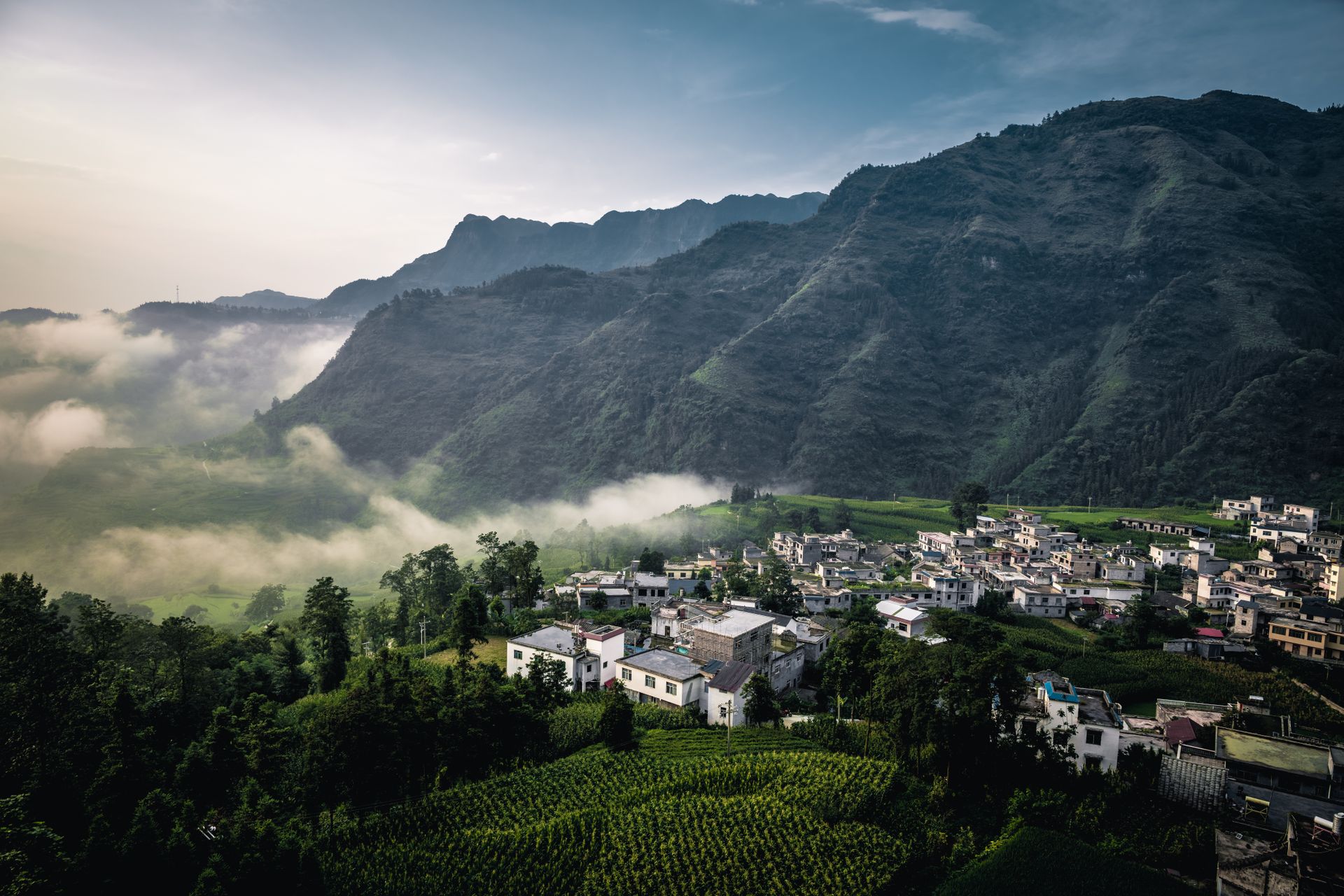
East Asia
China
Ancient traditions, fast-paced cities and still landscapes exist side by side, in a country that seems to reinvent itself everywhere you look.
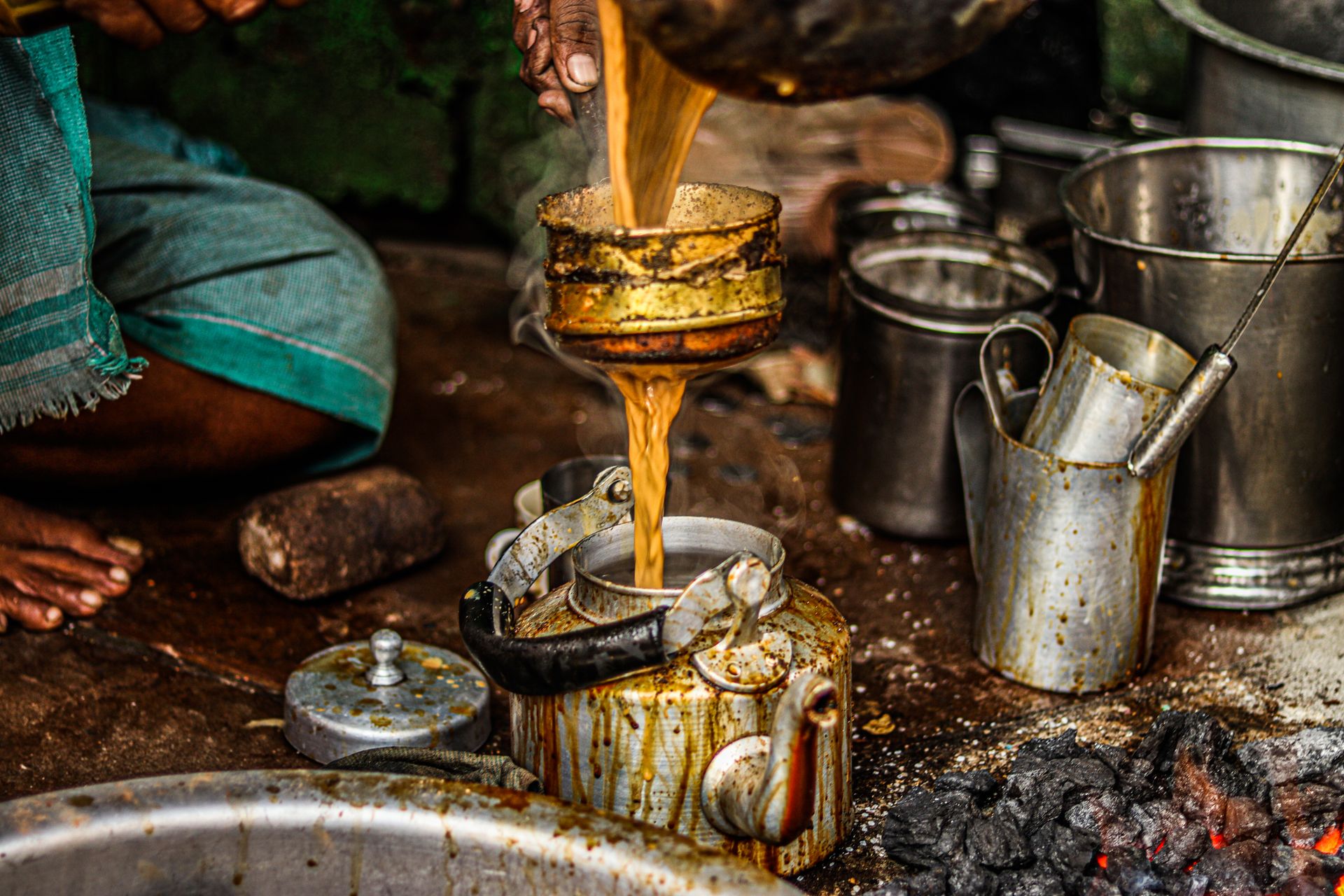
South Asia
India
Sacred and everyday, silence and noise: extremes that simply coexist on this subcontinent, no explanation needed.
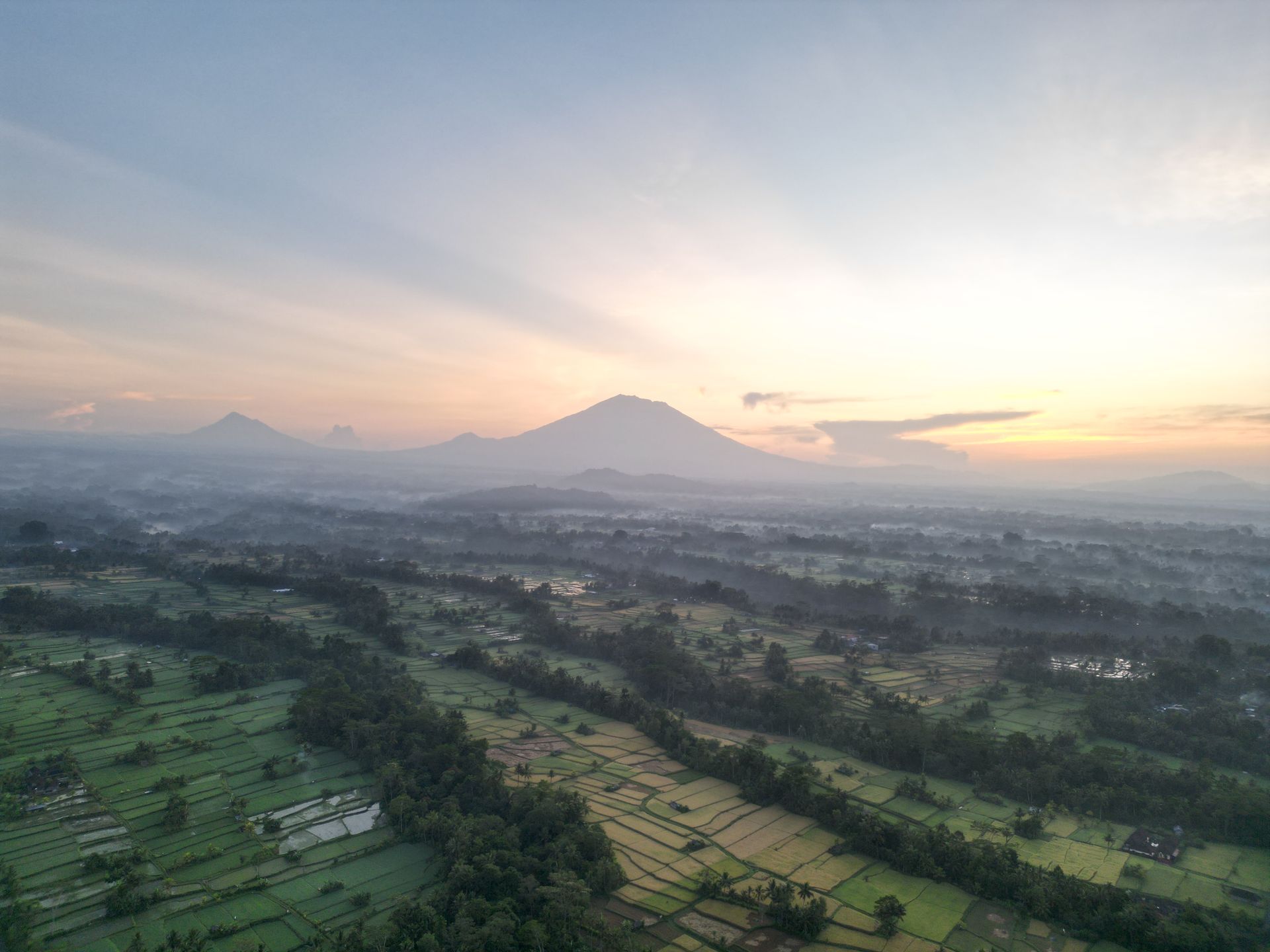
South-East Asian archipelago
Indonesia
Thousands of islands, no two alike: an archipelago that stretches far beyond the Bali most people know.
How it works
This is how your journey to Morocco takes shape.
Six steps, from your first story to your homecoming. The conversation and the feasibility check cost you nothing.
-
01
Tell us your story
Fill in the form or give us a call. You do not need a route yet: a country, a period or just an idea is enough.
-
02
The conversation and the check
We talk through what you are looking for, by phone or by video, and check whether it can be done. If it can, we set down together what we will make for you.
-
03
We design your journey
We build your programme up, day by day, together with our own people in the country itself.
-
04
Your proposal
You read your journey day by day, with everything that is included. You say what you would like differently, until it is right.
-
05
Ready to depart
You send us your details, we send you your travel documents. You have one fixed contact who knows your journey.
-
06
Travelling, and after
Your contact stays reachable while you are away. Once you are home, we call one more time.
The next step
What draws you to Morocco?
Tell us whether it's the silence of the desert, the chill of a mountain pass at dawn, or the rhythm of a medina that never quite stops. We build a trip around that.