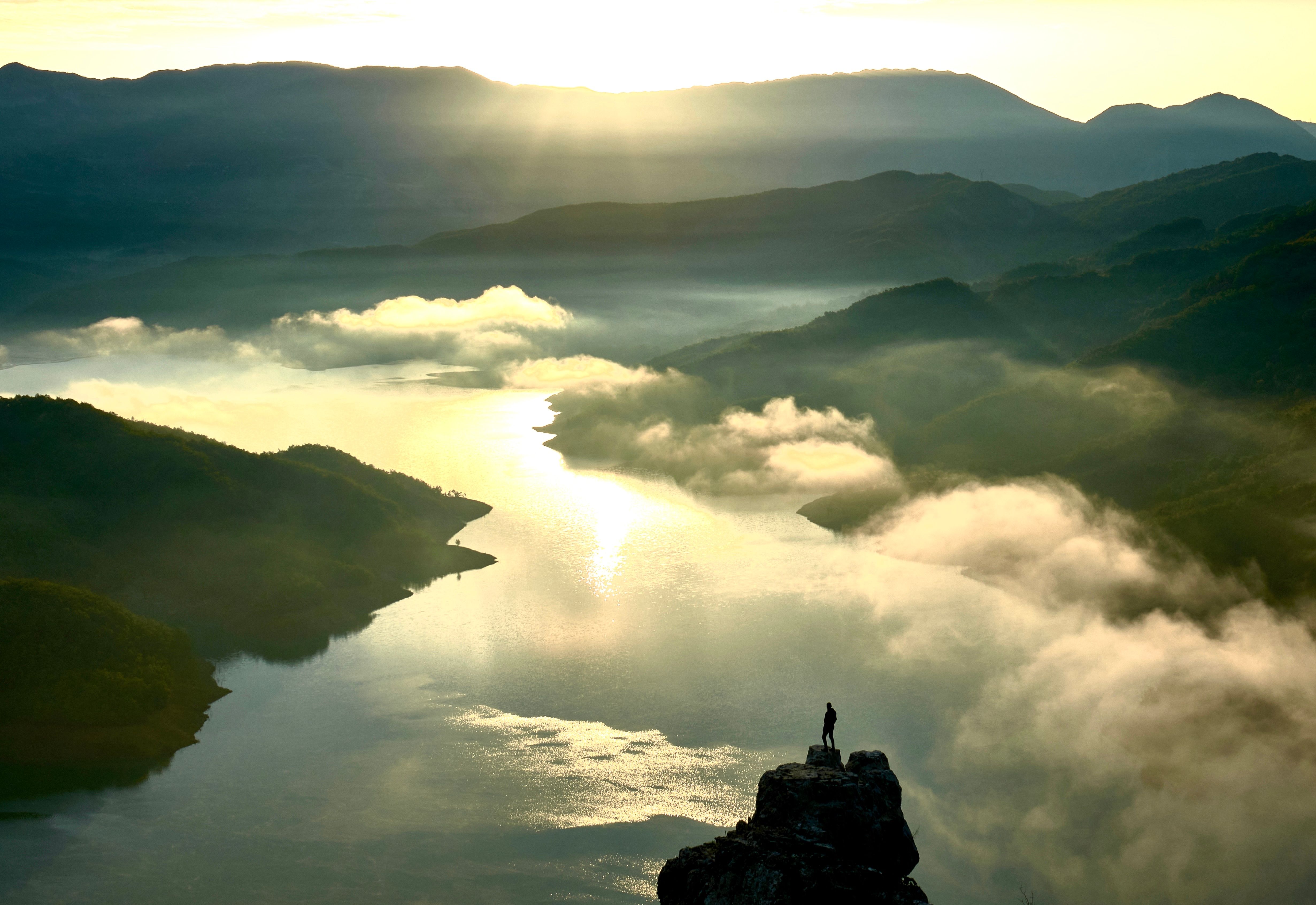
Western Balkans
Albania
The Adriatic and Ionian coast before the boulevards arrived.
This is Albania
Mountains that drop straight into the sea, towns with a history built in layers, and a coast that has not yet bent itself to visitors.
While most Balkan countries have already shaped their coastline for mass tourism, the Albanian coast largely remains open. No unbroken boulevard, no queue at the viewpoints, just a road that winds through the Ceraunian Mountains until it suddenly, hundreds of metres below, meets water in a blue you would sooner expect in Greece. It is no accident that Albania stayed off the map for so long: forty-five years of complete isolation under Enver Hoxha's communist regime left the country behind economically, but left the landscape and towns largely untouched.
What remains is a history in layers you can walk through: Illyrian and Greek ruins, Ottoman houses with bay windows above narrow streets, Italian art deco facades in Tirana, and, scattered across the whole country, tens of thousands of concrete bunkers, a defensive obsession that now survives mainly as an odd feature of the landscape. For travellers who would rather discover things themselves than follow a mapped-out route, that is a rare starting point.
No boulevard. No skyline of resorts.
Just a coastline that has yet to decide what it wants to become.
The regions
One small country, six entirely different faces
From Alpine peaks to Ionian bays, Albania is more compact than the Netherlands, yet changes landscape faster than any of its neighbours.

capital
Tirana
A capital that had to reinvent itself after 1990: facades in bright colours over communist-era blocks, a former bunker that is now an underground art museum, and around Skanderbeg Square a generation of chefs and designers who are not waiting for the guidebooks to catch up.

mountains
The Albanian Alps
Also known as the Accursed Mountains, a name that suits the rugged limestone peaks. Until recently reachable only by unpaved mountain roads, now known chiefly for the day hike between Thethi and Valbona, over a pass at 1,800 metres, past shepherds who still live by the old kanun customary law.

heritage
Berat & Gjirokastër
Two Ottoman towns on the UNESCO list, both built against a hillside. Berat carries the nickname 'town of a thousand windows' for its stacked white houses with wooden bay windows; Gjirokastër is sterner, built of grey stone, with a castle still watching over the Drino valley.

coast
The Riviera
Where the Ceraunian Mountains fall straight into the Ionian Sea, the result is a coastline of small bays rather than one continuous beach. Himara and Dhërmi stay manageable, Ksamil in the far south already draws more crowds, while the rest of the coast has not caught up yet.

antiquity
Butrint & the far south
A Greco-Roman city that survived almost undisturbed in a lagoon, with an amphitheatre, baptistery and castle ruins scattered among the vegetation. Saranda next door is the gateway, with Corfu visible on the horizon barely ninety minutes away by boat.

inland
Korça & Pogradec
On the eastern border lies a different Albania: high plateaus, vineyards at 800 metres, and Pogradec on Lake Ohrid, which the country shares with North Macedonia. Korça itself is known for its coffee culture and a cuisine that owes as much to the Mediterranean as to the Balkans.

People & customs
Besa: a word that carries more weight than a signature
Besa is a word you find everywhere in Albania, and one that resists easy translation: a given word, a code of honour that carries more weight than a contract. In the north, that tradition traces back to the kanun, a centuries-old customary law that makes hospitality a duty. A stranger knocking on the door is given shelter, whoever they are.
That hospitality exists alongside a religious diversity rare in the region: Muslims, Orthodox Christians, Catholics and Bektashi Sufis live here without the tensions found elsewhere in the Balkans. Religion was banned for decades under communism, and, paradoxically, that may be part of why nobody makes an issue of it now.
Nature
Three landscapes with nothing in common

Thethi & Valbona
The classic crossing through the Albanian Alps: a day hike from village to village over the Valbona Pass, with views of limestone peaks that rival Switzerland but without the infrastructure, and without the crowds.

The Llogara Pass
Barely twenty kilometres from the coast, the road climbs to 1,000 metres through pine forest, then plunges back down in hairpin bends to the Ionian Sea. One of the few places on earth where mountains and sea meet this abruptly.

The Vjosa river
One of the last wild rivers in Europe, unbroken by dams along its entire length, churning through the valley past gravel banks and abandoned bridges. Protected as a national park since 2023, a rarity on a continent where wild rivers have nearly run out.
Looking past the highlights
Why we look at Albania differently
Forty-five years behind closed doors From 1945 to 1990, Albania was the most closed country in Europe, with bunkers as a symbol of a regime bracing for an invasion that never came. The result: none of the decades of coastal development seen in other Adriatic countries.
Four faiths, no friction Religious tolerance here is not a tourist slogan but a historical fact. Mosques, Orthodox churches and Catholic cathedrals share the same streets, often for centuries.
The cuisine changes by valley Mountain villages cook with yoghurt, maize and dried meat; the southern coast leans on olive oil and fish in the Greek tradition; Korça and the interior have their own, more Ottoman cuisine. There is no single 'Albanian cuisine', more like half a dozen regional ones.
Infrastructure trails the landscape Roads, signage and accommodation have improved fast over the past ten years, but not evenly everywhere. Anyone wanting to see the best of the country plans it with someone who knows where the map still gets ahead of reality.
What you can do here
No fixed itinerary. A country full of choices.
Albania refuses to be squeezed into one set route. The possibilities below are starting points, not a fixed path.

Hiking in the Alps
From the classic Thethi-Valbona crossing to longer routes within the Peaks of the Balkans trail, which links Albania, Kosovo and Montenegro.

Exploring the coast by boat
Bays between Himara and Dhërmi are often reachable only by water. A small boat takes you to beaches with no road in.

Towns on foot
Berat, Gjirokastër and Korça are best discovered without a fixed route: narrow alleys, a coffee on a square, a conversation that starts on its own.

Antiquity among the greenery
Butrint and Apollonia are rarely crowded, Greek and Roman ruins you can often walk through alone.

Wine and food in Korça
Mountain vineyards at 800 metres, paired with a cuisine closer to Greece and Anatolia than to the rest of the Balkans.
None of these experiences are fixed in a programme. They are shaped around whoever is travelling.

The road over the Llogara Pass, where the Ceraunian Mountains drop straight into the Ionian Sea.
When would you travel?
When to travel to Albania
May-June and September offer the best balance: the mountain trails are free of snow, the coast is warm without the July crowds, and towns like Berat and Gjirokastër remain liveable without a group on every square.
July and August still work well for anyone after the coast alone, but expect more people in Ksamil and Saranda, and heat that makes hiking in the lower valleys less pleasant. The highest mountain passes are only fully clear of snow from early June.
Jan
Feb
Mar
Apr
May
Jun
Jul
Aug
Sep
Oct
Nov
Dec
Top: the ideal balance between weather, calm and access to the mountains.
Good: fine weather, but busier on the coast or still wintry on the highest passes.
Fair: outside the window for hiking in the Alps; the coast and interior remain travel-worthy.
Worth knowing
Practical, without the noise.
Practical matters that make planning easier.
- Getting there
- Direct flights to Tirana from a number of European cities; from Belgium usually with a change in Vienna, Rome or Istanbul.
- Documents
- Belgians can travel on a valid ID card or passport for stays of up to 90 days.
- Health
- No mandatory vaccinations; travel insurance with medical cover is recommended, especially for mountain trips.
- Pace
- Roads in the north and the mountains are narrower and slower than the map suggests. Allow more time than the distance implies.
- Money
- The lek (ALL) is the local currency; euros are accepted in many places but not always at a fair rate.
Frequently asked questions
Is Albania safe to travel in?
Yes. Crime against tourists is low, and the notorious blood feuds from the kanun tradition play out within a small, isolated context in the north. Travellers notice none of it in practice. Ordinary caution is enough.
Do I need a hire car?
If you want to see the country widely, yes. Public transport outside Tirana is limited. In the mountains, we often combine this with a local driver who knows the roads.
Can Albania be combined with a neighbouring country?
Certainly. Montenegro, Kosovo, North Macedonia and even Corfu in Greece all lie a short distance from the border or the coast.
Is the Riviera as busy as Croatia?
Not yet. Ksamil now draws crowds in July-August, but most of the coast, Himara, Dhërmi, and the bays between them, remains noticeably quieter than the Croatian or Greek islands.
Or perhaps this
Other destinations
Still weighing it up? That is no problem at all. The right country often only becomes clear once the conversation starts.
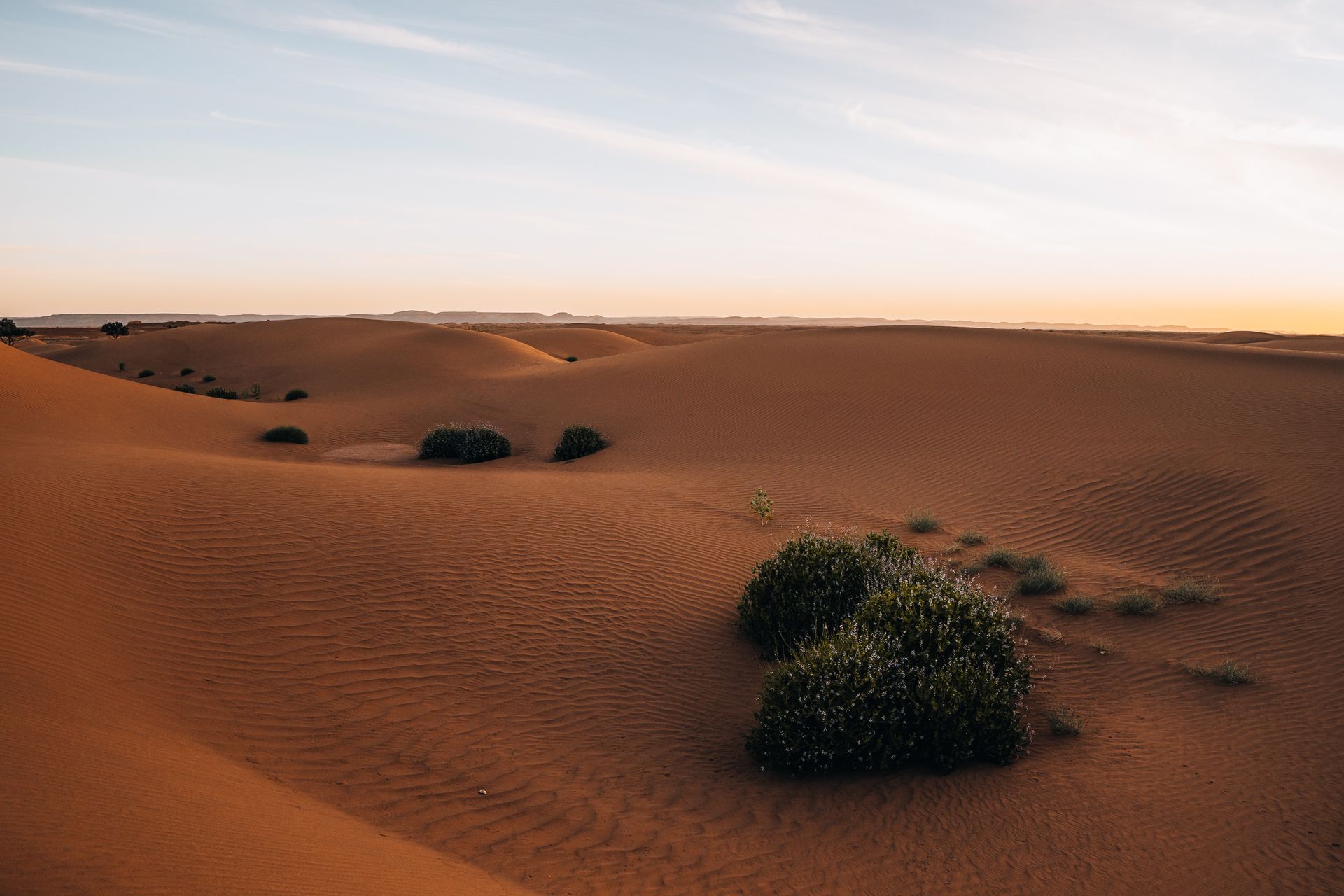
Maghreb, north-west Africa
Morocco
A country where desert, mountains and coast merge within a few hours' drive, and the cities hold their own just as well.
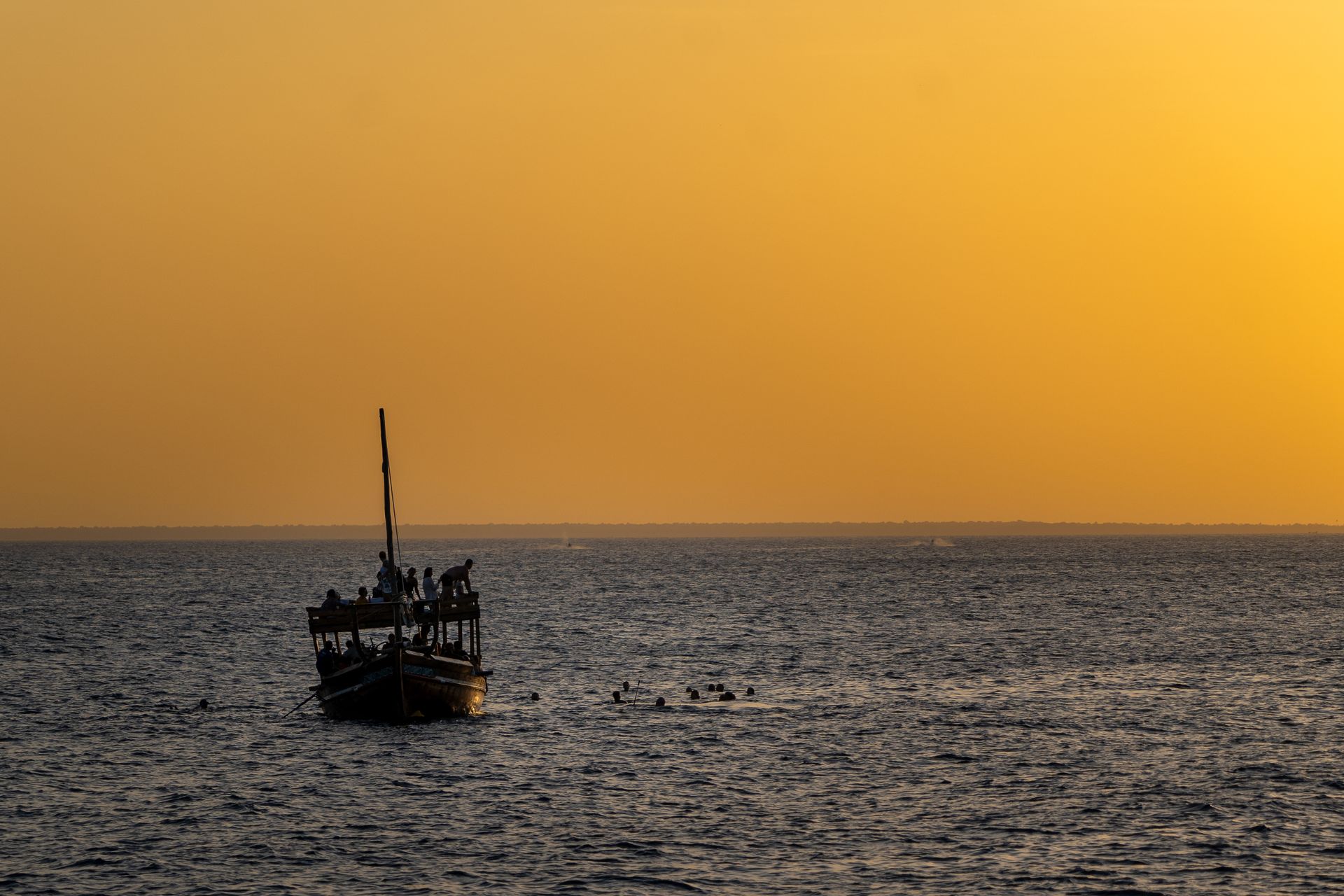
South-East Africa, Indian Ocean coast
Mozambique
A coastline tourism has yet to discover, still bearing clear traces of its Swahili and Portuguese past.
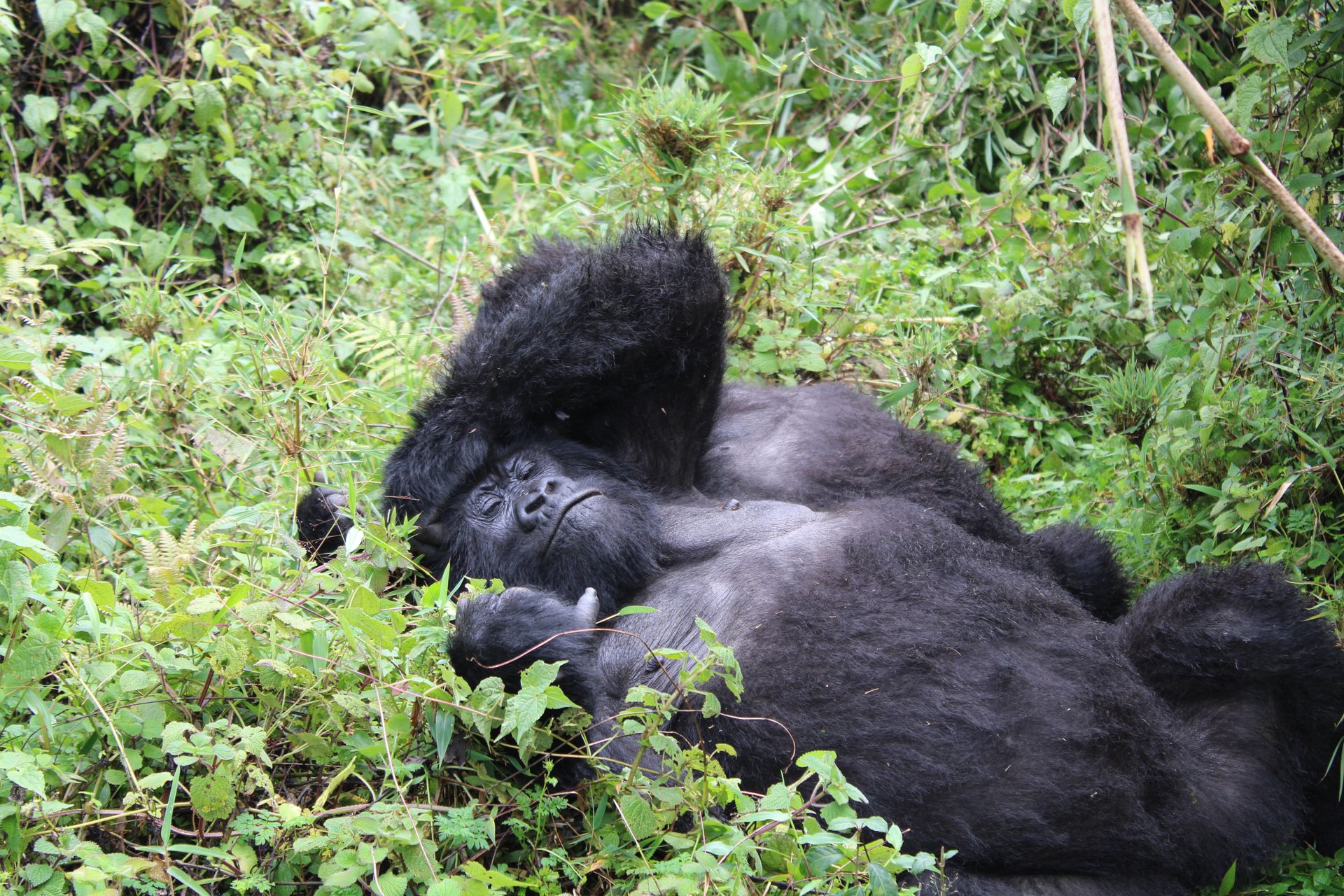
Central Africa, Great Lakes region
Rwanda
A country that doesn't hide its history, and has grown into one of the cleanest and greenest on the continent.
How it works
This is how your journey to Albania takes shape.
Six steps, from your first story to your homecoming. The conversation and the feasibility check cost you nothing.
-
01
Tell us your story
Fill in the form or give us a call. You do not need a route yet: a country, a period or just an idea is enough.
-
02
The conversation and the check
We talk through what you are looking for, by phone or by video, and check whether it can be done. If it can, we set down together what we will make for you.
-
03
We design your journey
We build your programme up, day by day, together with our own people in the country itself.
-
04
Your proposal
You read your journey day by day, with everything that is included. You say what you would like differently, until it is right.
-
05
Ready to depart
You send us your details, we send you your travel documents. You have one fixed contact who knows your journey.
-
06
Travelling, and after
Your contact stays reachable while you are away. Once you are home, we call one more time.

The next step
How would you like to discover Albania?
Tell us whether you're dreaming of mountain trails in the Alps, hidden bays along the Riviera, or days among Ottoman facades in Berat and Gjirokastër. We connect that with a local expert who has known the country from the inside for years.