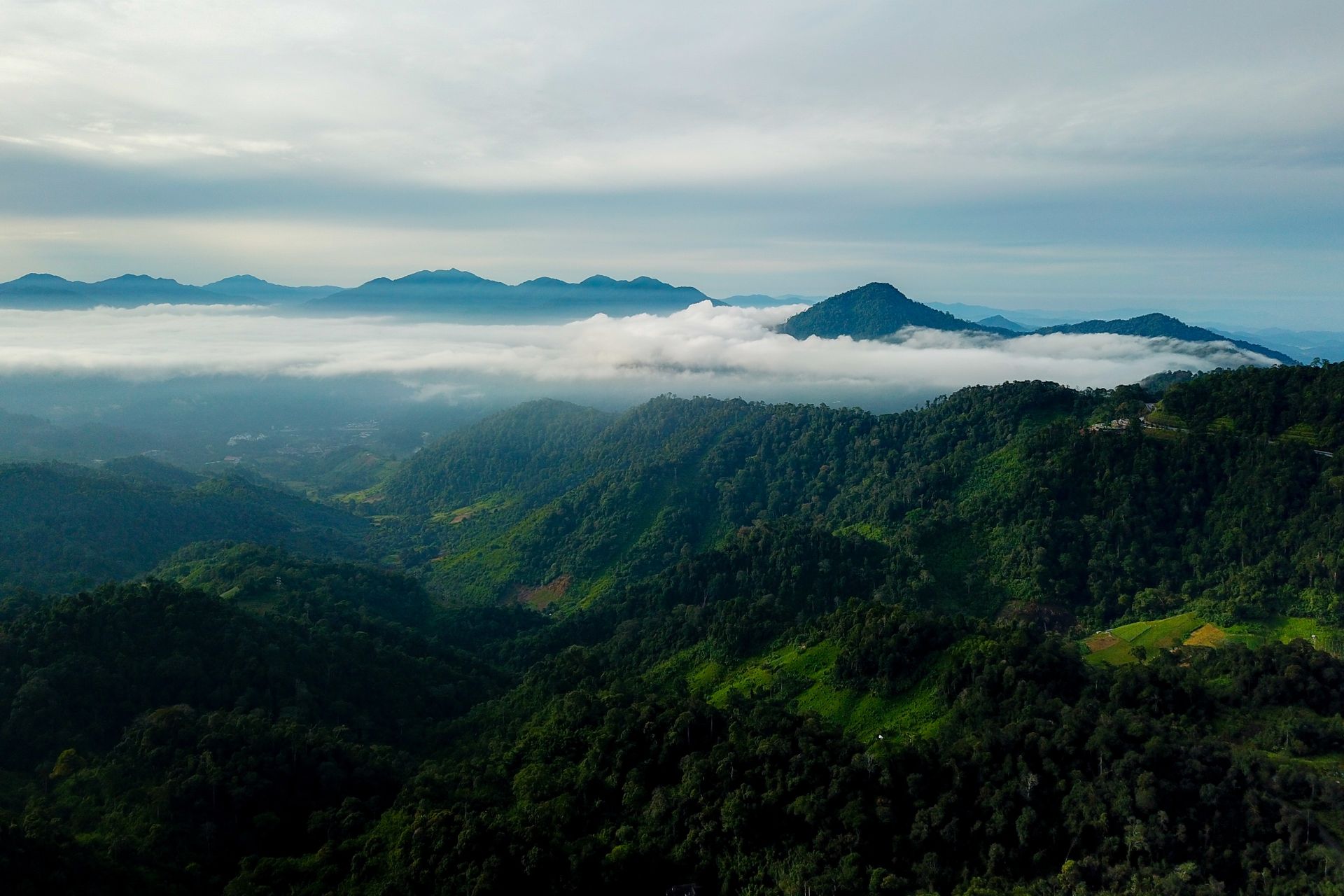
Peninsular Malaysia and Borneo
Malaysia
Two coasts, one rainforest that's never far away.
This is Malaysia
Three worlds at street level, and the jungle is waiting round the corner.
Malay, Chinese and Indian lives sit side by side without effort, with rainforest that's never far away, not even from the cities. In Kuala Lumpur, twenty minutes take you from a Taoist temple thick with incense to a neighbourhood ringing with brass bells, to a mosque calling out over the traffic for prayer. Nobody stages this for a photo. It's simply how the city breathes.
What looks like one country on the map is really two. Peninsular Malaysia, with Kuala Lumpur, the colonial facades of Malacca City, the tea plantations of the Cameron Highlands, is separated by the South China Sea from Borneo, where Sarawak and Sabah follow a slower, greener rhythm: longhouses along the river, rainforest that has grown undisturbed for millions of years, orangutans that keep to no schedule at all.
We never plan Malaysia as a single line on a map, then. Peninsula and Borneo each deserve their own pace, and the people you meet along the way, a Peranakan cook in Penang, an Iban guide in the Sarawak interior, tell a different story than the guidebook suggests.
The regions
One country, at least six faces
The peninsula and Borneo share a flag, not an identity. Six places that show how varied Malaysia is, from colonial port cities to rainforest that has never been logged.

capital
Kuala Lumpur
A city that grows in layers: colonial railway stations, towers of glass, and night markets in between where Malay, Chinese and Indian kitchens smoke side by side.

port city
Georgetown, Penang
Unesco heritage streets where Peranakan houses, Chinese clan houses and Indian temples stand side by side, and where dinner on the street is often the highlight of the day.

highlands
Cameron Highlands
Tea plantations at nineteenth-century British altitude, where the air suddenly turns cool and the rows of bushes wrap around the hills like contour lines.
port city
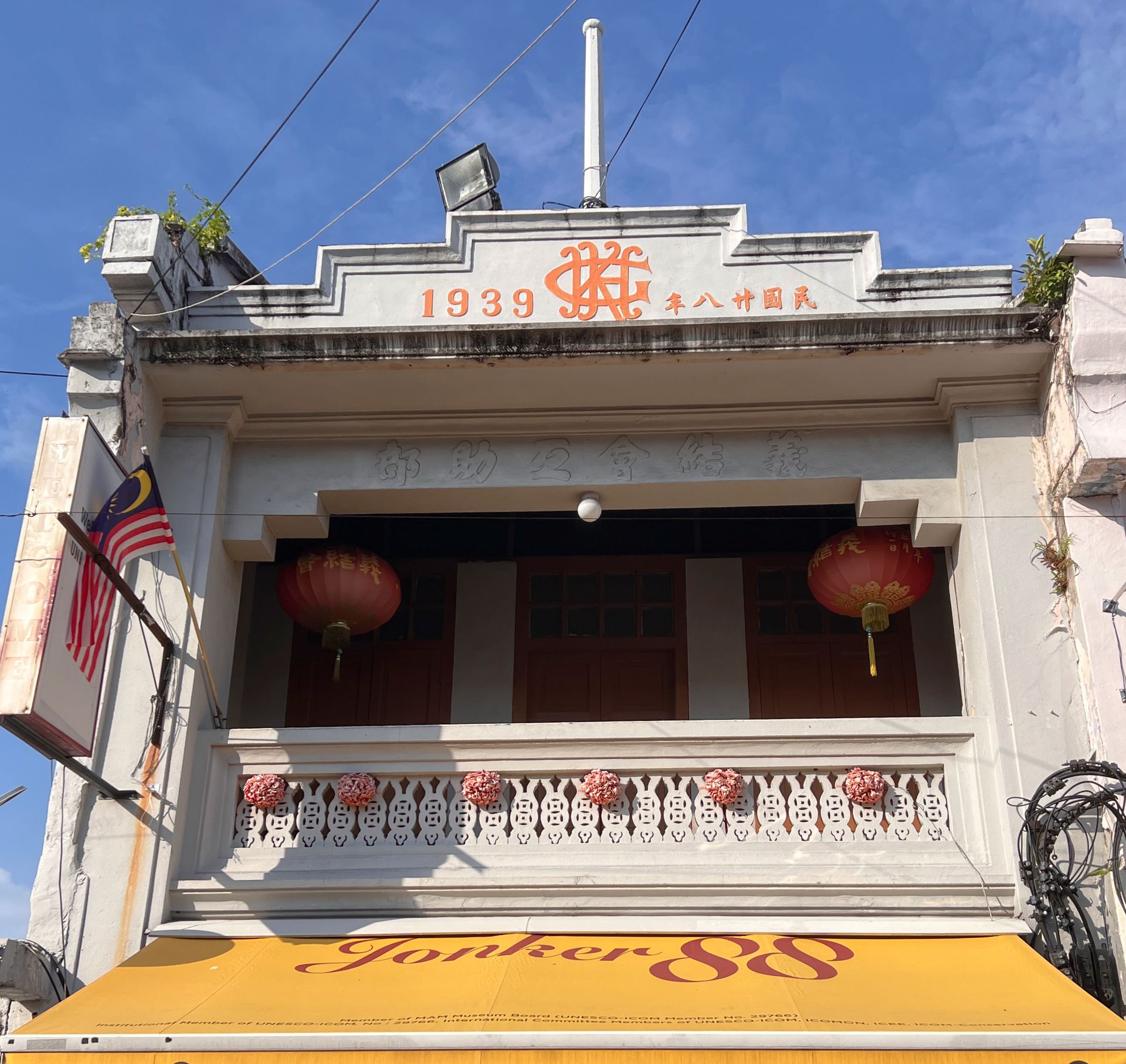
Malacca
Portuguese, Dutch and British layers stacked along a river that was for centuries the main trade route of Southeast Asia.

Borneo
Sarawak
Around Kuching and upriver, Iban and Bidayuh communities still live in longhouses, with rainforest that literally begins at the veranda.
Borneo
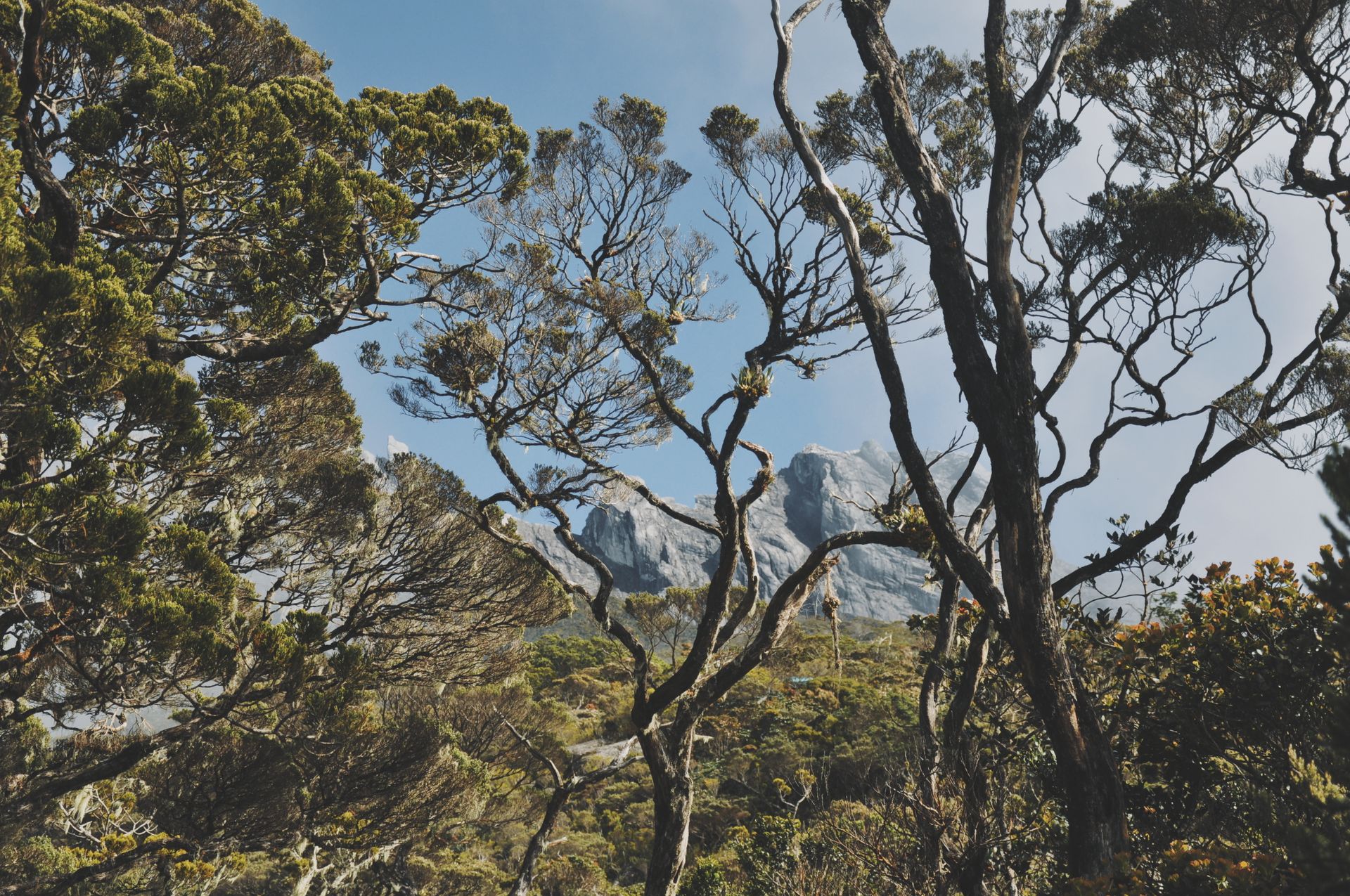
Sabah
From the summit of Kinabalu to the untouched lowland forests of Danum Valley: here nature isn't a backdrop, it's the main reason to come.

People and food
A cuisine that changes dialect from stall to stall
In a hawker centre in Penang you order laksa at one stall, roti canai at another and karipap at a third: three cuisines, three languages, one table. This isn't a fusion experiment, it's how Malaysians have eaten for generations: side by side, without one replacing the other.
Peranakan cuisine, the Chinese-Malay tradition of the Straits, perhaps sums up that layering best: coconut milk and curry leaves alongside soy sauce and five-spice powder, born from marriages between Chinese traders and Malay families centuries ago. Sit down to eat in Malacca or Penang and you taste that history quite literally.

A spice street in Georgetown, where the smell alone gives away which stall is the most popular.
The rainforest
Older than the Amazon, and closer to the cities than you'd think
Taman Negara on the peninsula and the forests of Sabah and Sarawak rank among the oldest rainforests in the world, older than the Amazon, and never interrupted by an ice age. What lives there has been living there so long it pays little attention to a travel schedule.
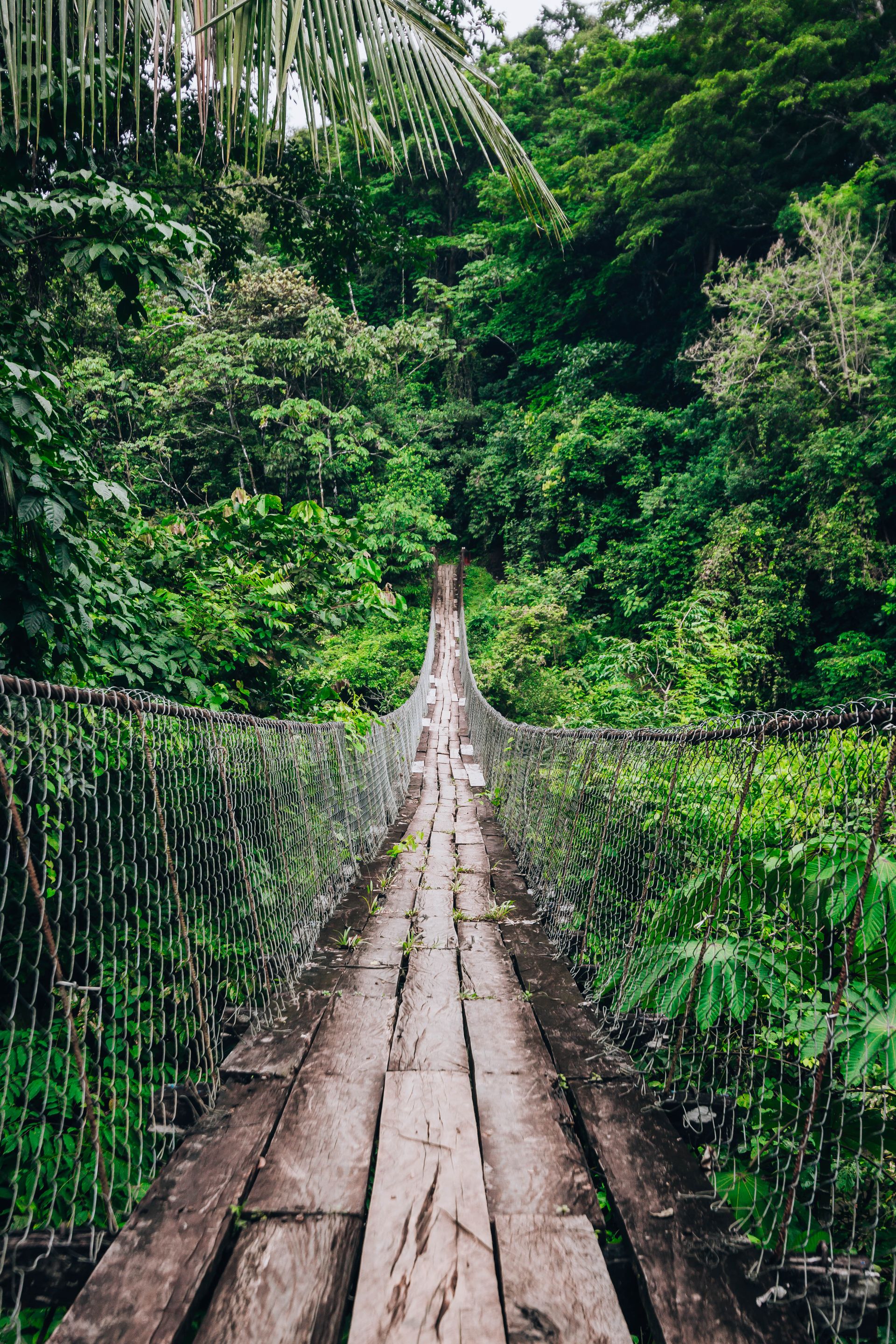
Taman Negara
One of the oldest rainforests in the world, with a canopy walkway that takes you high among the treetops, closer to the ecosystem than the forest floor ever allows.

Danum Valley
Untouched lowland rainforest in Sabah, without roads or villages within its boundaries, one of the few places where the forest is left entirely to itself.

Kinabatangan River
At sunrise and sunset you drift past banks where proboscis monkeys, orangutans and hornbills show themselves without hurry, no guaranteed sightings, but an unusually high chance.
What's possible here
No fixed programme, but a country full of starting points
Malaysia doesn't fit into a single set route. These are the experiences we like to think through with you.

Walking above the treetops in Taman Negara
The canopy walkway takes you dozens of metres up among the crowns, with a view you'd never get from the forest floor.

Staying overnight in an Iban longhouse
Upriver in Sarawak, where a community welcomes you under one long roof and the rainforest sets the scene for every evening.

Tasting Georgetown, stall by stall
An evening among the hawker stalls of Penang, where Chinese, Malay and Indian dishes stand steaming quite literally side by side.

Diving at Sipadan or the Perhentian Islands
Off the peninsula's east coast and off the Sabah coast lies water with a visibility and coral richness among the best in Southeast Asia.

Walking among the tea bushes of the Cameron Highlands
Paths through the plantations pass pickers and processing sheds, with a coolness that feels surprising after the lowlands.
Combining the peninsula with Borneo takes careful logistics. We're happy to think that through with you.
No 'melting pot', three lives that exist side by side,
in a country where the rainforest is never far away.
Looking past the highlights
Why we don't treat Malaysia as a single trip
Two countries on one passport The peninsula and Borneo feel like two destinations: different distances, different pace, different seasons. Seeing both doesn't need an extra day, it needs a different kind of planning.
More than living side by side The coexistence of Malay, Chinese and Indian communities isn't backdrop for a 'melting pot' story. These are separate traditions that developed alongside each other, with their own temples, own kitchens, own holidays, never blurred into something vague.
Rainforest asks for time, not ticked boxes An orangutan or a proboscis monkey can't be scheduled. We build room into the itinerary rather than promising a tight wildlife programme.
Not every coast on the same clock While the peninsula's west coast is dry, the east coast can be in monsoon. We match the route to the weather, not the other way round.
When would you travel?
The west coast, the east coast and Borneo don't follow the same calendar
The peninsula has two faces: the west coast, Kuala Lumpur, Malacca, Penang, is good to travel for most of the year, while the east coast, with islands like the Perhentians and Redang, sits under the northeast monsoon from November to February and is barely accessible then.
Borneo has no strict dry season. The rainforest stays humid year-round. But the heaviest rain usually falls between October and February. March to May is the most predictable window for the whole country.
Jan
Feb
Mar
Apr
May
Jun
Jul
Aug
Sep
Oct
Nov
Dec
Top: drier weather on the peninsula and a quieter rainforest in Borneo.
Good: still perfectly travelable, with a chance of shorter tropical showers.
Fair: monsoon on the peninsula's east coast and heavier rainfall in Borneo, not impossible, but better suited to flexible travellers.
Worth knowing
Practical, without the noise.
Practical matters that make the difference between a smooth trip and a rushed one.
- Visa
- Belgians travel visa-free to Malaysia for tourist stays of up to 90 days.
- Health
- No mandatory vaccinations; protection against mosquitoes is advisable in rainforest areas.
- Getting there
- Kuala Lumpur is the hub; onward to Sabah or Sarawak you fly domestically, across the South China Sea.
- Pace
- Combining the peninsula and Borneo is possible, but needs enough days per region, not a one-night stopover.
- Language
- English is widely and well spoken, even outside the major cities.
Frequently asked questions
Can you combine the peninsula and Borneo in one trip?
Yes, but count on a domestic flight and give both regions enough days. In feel and rhythm, they're two different destinations.
Is Malaysia suitable outside the peak season?
Certainly, as long as you account for the monsoon on the peninsula's east coast between November and February.
How likely are you to see wild orangutans?
In areas like the Kinabatangan River and Danum Valley the chance is real, but never guaranteed. It remains wild, unplanned behaviour.
Is English enough to get by?
Yes, English is spoken widely and well, from Kuala Lumpur to the longhouses of Sarawak.
Or perhaps this
Other destinations
Still weighing it up? That is no problem at all. The right country often only becomes clear once the conversation starts.
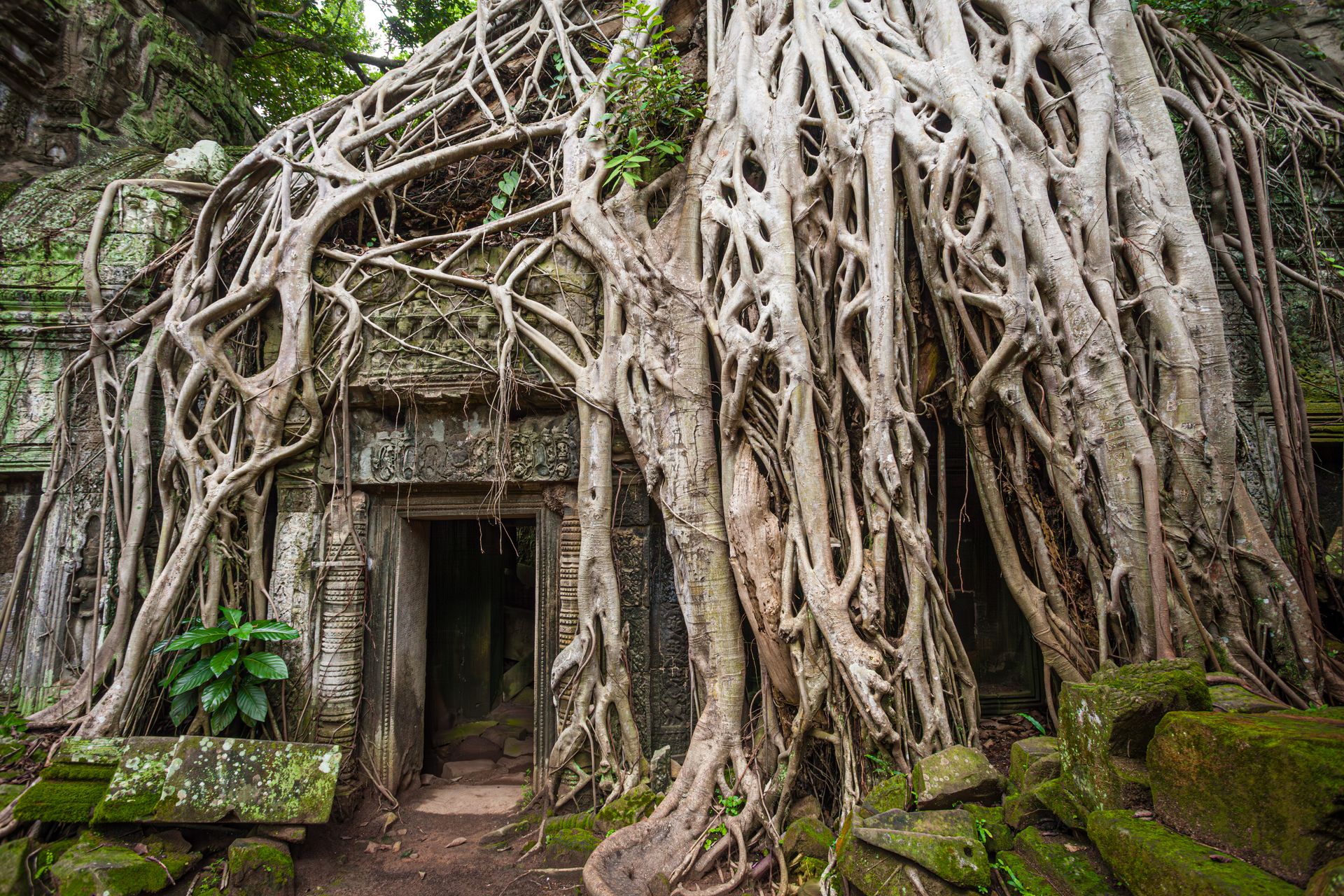
South-East Asia
Cambodia
Overgrown temples and a quiet resilience that say more about the past than any history book.
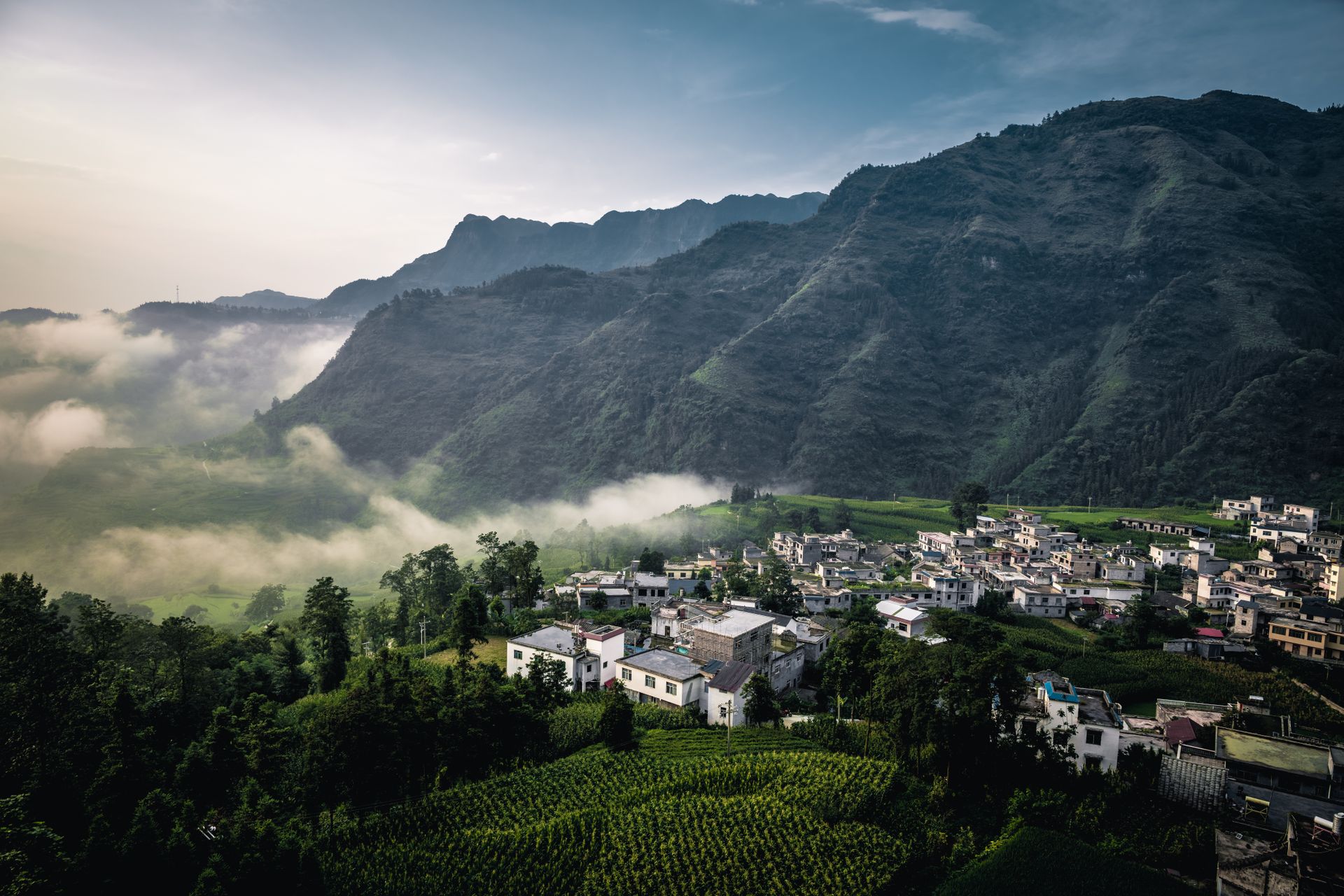
East Asia
China
Ancient traditions, fast-paced cities and still landscapes exist side by side, in a country that seems to reinvent itself everywhere you look.
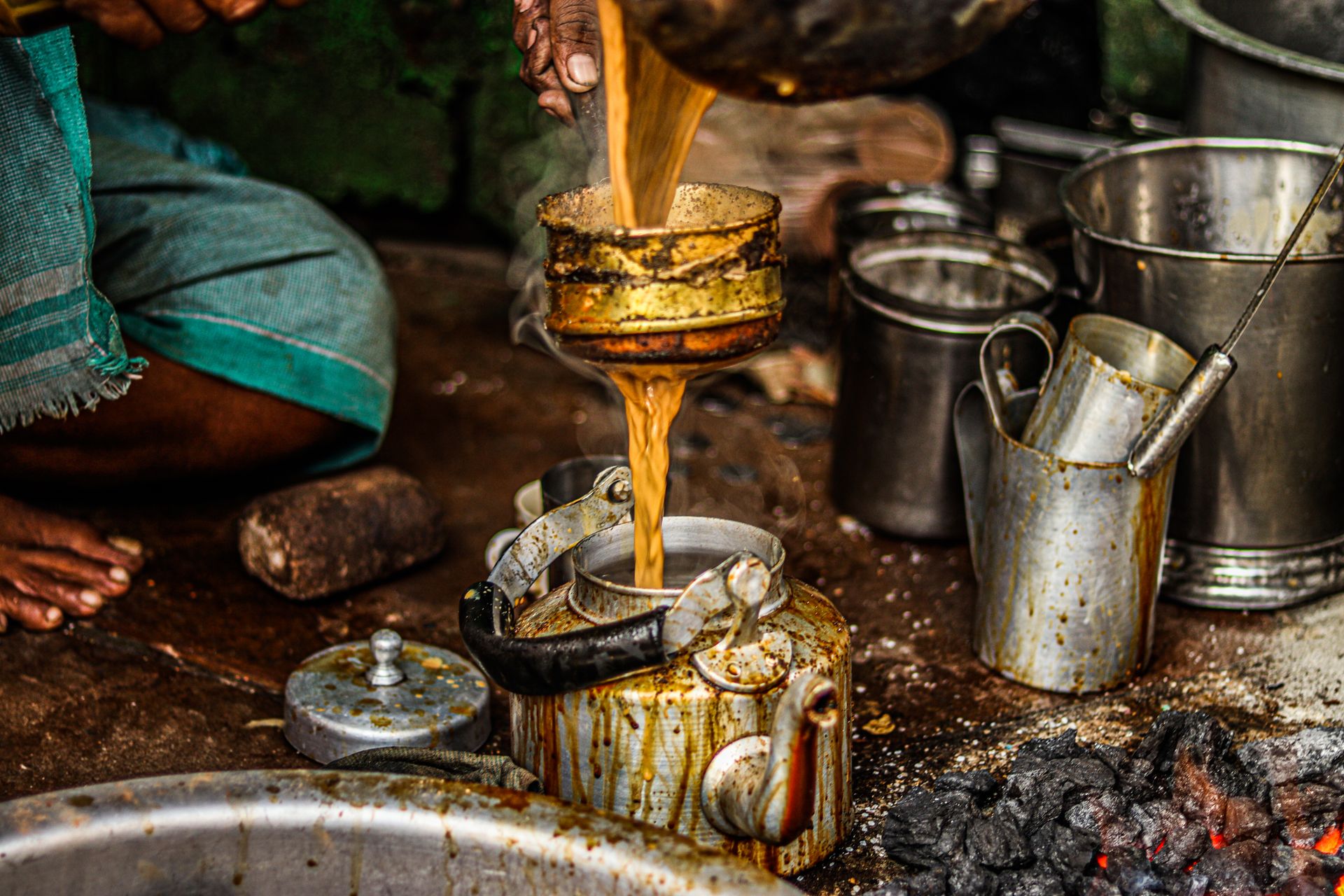
South Asia
India
Sacred and everyday, silence and noise: extremes that simply coexist on this subcontinent, no explanation needed.
How it works
This is how your journey to Malaysia takes shape.
Six steps, from your first story to your homecoming. The conversation and the feasibility check cost you nothing.
-
01
Tell us your story
Fill in the form or give us a call. You do not need a route yet: a country, a period or just an idea is enough.
-
02
The conversation and the check
We talk through what you are looking for, by phone or by video, and check whether it can be done. If it can, we set down together what we will make for you.
-
03
We design your journey
We build your programme up, day by day, together with our own people in the country itself.
-
04
Your proposal
You read your journey day by day, with everything that is included. You say what you would like differently, until it is right.
-
05
Ready to depart
You send us your details, we send you your travel documents. You have one fixed contact who knows your journey.
-
06
Travelling, and after
Your contact stays reachable while you are away. Once you are home, we call one more time.

The next step
How do you picture Malaysia: peninsula, Borneo, or both?
Tell us what draws you: the streets of Georgetown, a night in a longhouse by the river, or the stillness of the rainforest in Danum Valley. We'll think it through with you from there.