Alpine countries
Switzerland
A country that has nothing left to prove.
This is Switzerland
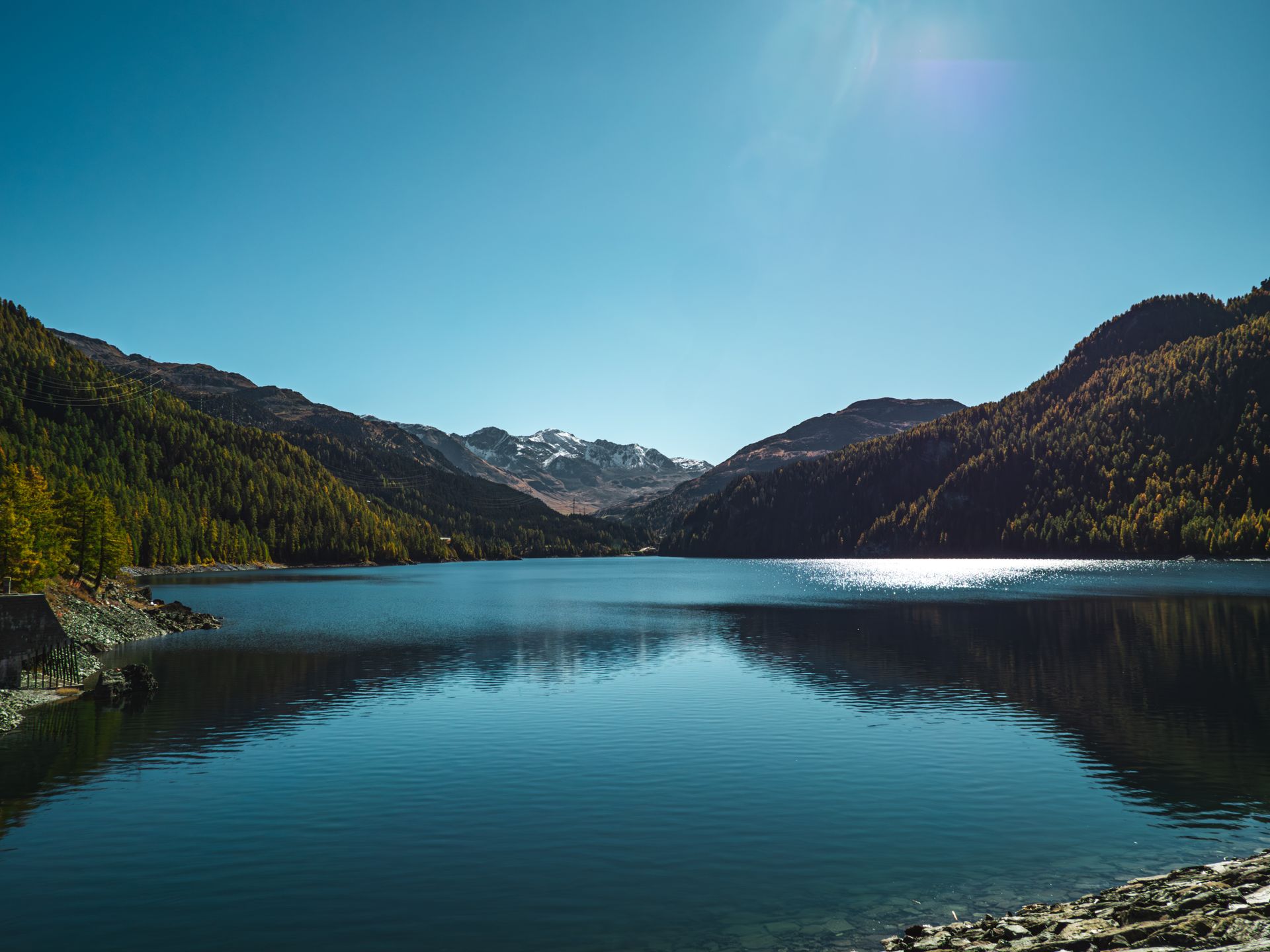
In Switzerland the mountains don't ask for attention, and order is almost a feature of the landscape.
Order here isn't strictness. It's simply how the valley works.
The mountains are always there, on every side, but they aren't posing. They sit exactly as they have for centuries: high, quiet, unannounced. What stands out isn't the view, that finds itself soon enough, but how matter-of-factly everything around it works. The train to Andermatt leaves at the minute printed on the board, even if nobody gets on. The path to the hut is marked, not advertised. Someone, somewhere, decided that's how it should be, and the rest of the country agreed.
That makes Switzerland easy to underrate as a destination: too tidy, too predictable, too expensive, or so it seems to people who never got further than Lucerne or a cable car station. But behind every pass lies a valley with its own language, its own cheese and its own way of staying unnoticed. We would rather go to that valley than to the viewpoint next door.
The regions
One country, six very different valleys
Switzerland isn't so much a country as a sum of valleys, and each one has its own language, pace and dish. These six give a good sense of just how much variety a small country can hold.

high plateau
Engadin
St Moritz draws the attention, but the Engadin is a long, high valley taking in Zernez and the Val Müstair, where Romansh is still the everyday language and the Swiss National Park has been left undisturbed since 1914.

glacier country
Bernese Oberland
Below the Eiger and the Jungfrau lies Lauterbrunnen with its eighty waterfalls, but a valley further on, around Kandersteg, it's just as striking and a good deal quieter.

vineyard slopes
Valais
The Matterhorn view from Zermatt is the country's best-known image, but Valais is really a valley of steep vineyard slopes, Fendant and Cornalin wine, and side valleys like Val d'Anniviers where the villages are still built from wood and slate.

southern border
Ticino
South of the Gotthard tunnel the language turns Italian, palm trees grow along Lake Lugano, and the Val Verzasca holds granite villages that were hard to reach for centuries.

watchmaking country
Jura
A rolling, wooded border region where watchmakers have been producing precision work for three centuries, with villages that rarely see a tourist and a landscape that looks more like the Ardennes than postcard Switzerland.

farming country
Appenzell
Painted farmhouses, cows still led up to the alpine pastures in May wearing flower garlands, and villages where the Landsgemeinde, voting by show of hands on the village square, is still very much alive.
Switzerland doesn't reveal itself from the cable car,
but in the village where the train just happens to stop.

Precision and people
Four languages, and nobody thinks it's remarkable
German, French, Italian and Romansh don't sit side by side here as a tourist curiosity, but as four ways of inhabiting the same country. Drive from Zurich to Lugano and the announcements on the train switch language somewhere around the Gotthard, without anyone remarking on it. It isn't a display of diversity. It's simply how the country has worked for centuries.
That same practicality shows up in government: major decisions still regularly go to a referendum, and in some cantons people literally vote by raising a hand on the village square. Order and a say in things aren't at odds here. Spend a while in a valley and you notice that the precision isn't coldness but a form of care: for the path, for the train, for the neighbour.
Mountains and lakes
Water, ice and sixty-five thousand kilometres of trail

Lakes
Lake Geneva and Lake Lucerne are so clear that you can see the depth before you reach it. Between the lakeside villages, a boat runs as a matter of course, the way a bus would anywhere else.
Glaciers
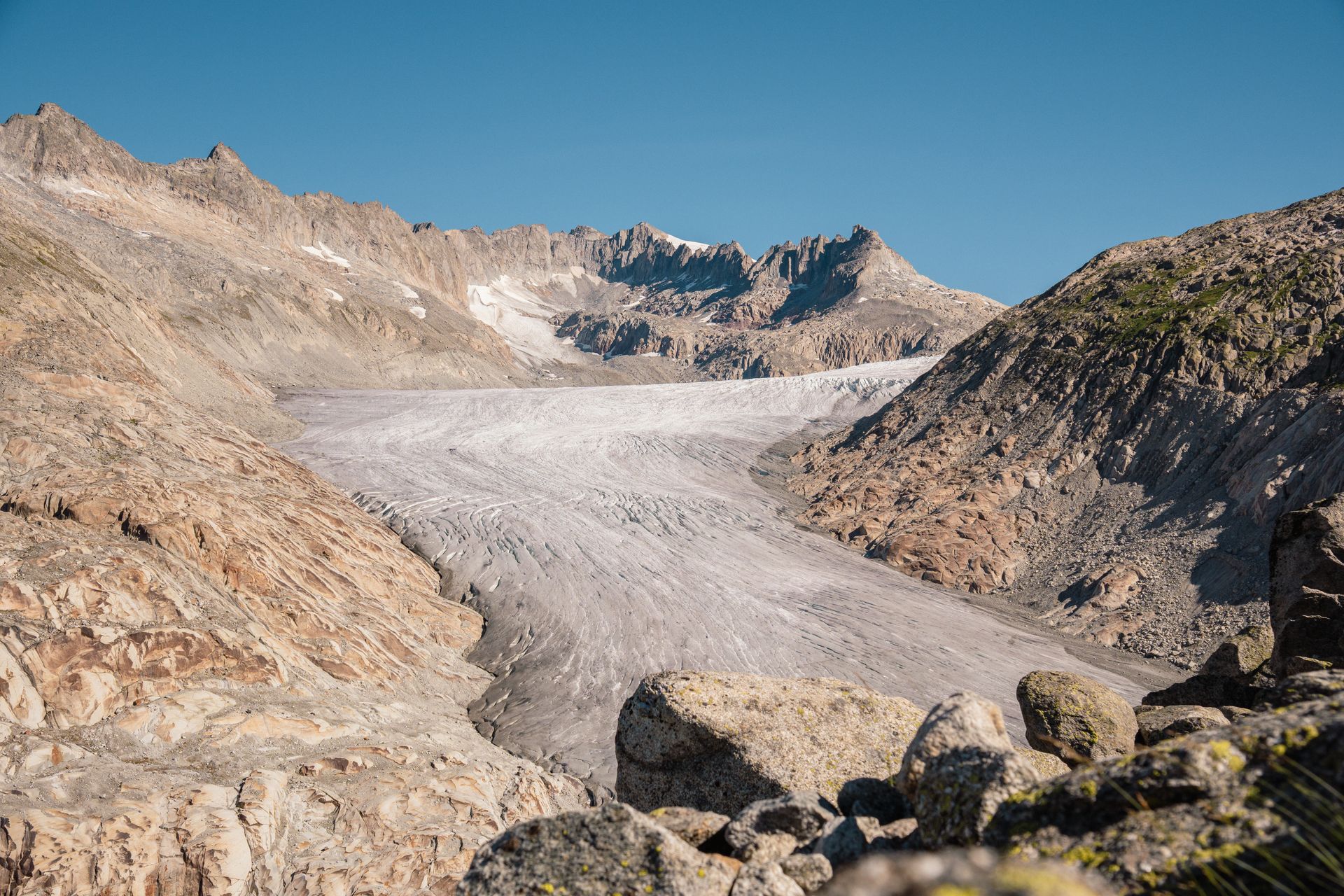
The Aletsch Glacier is the largest in the Alps, nineteen kilometres of ice on the Unesco list. You see it best from Bettmeralp, not from the busy Jungfraujoch, and usually on your own.

Trails
More than sixty-five thousand kilometres of marked trail connect mountains with alpine pastures and staffed huts where a hot meal is cooked in the evening. A hut-to-hut trek needs no car, just a good pair of legs.
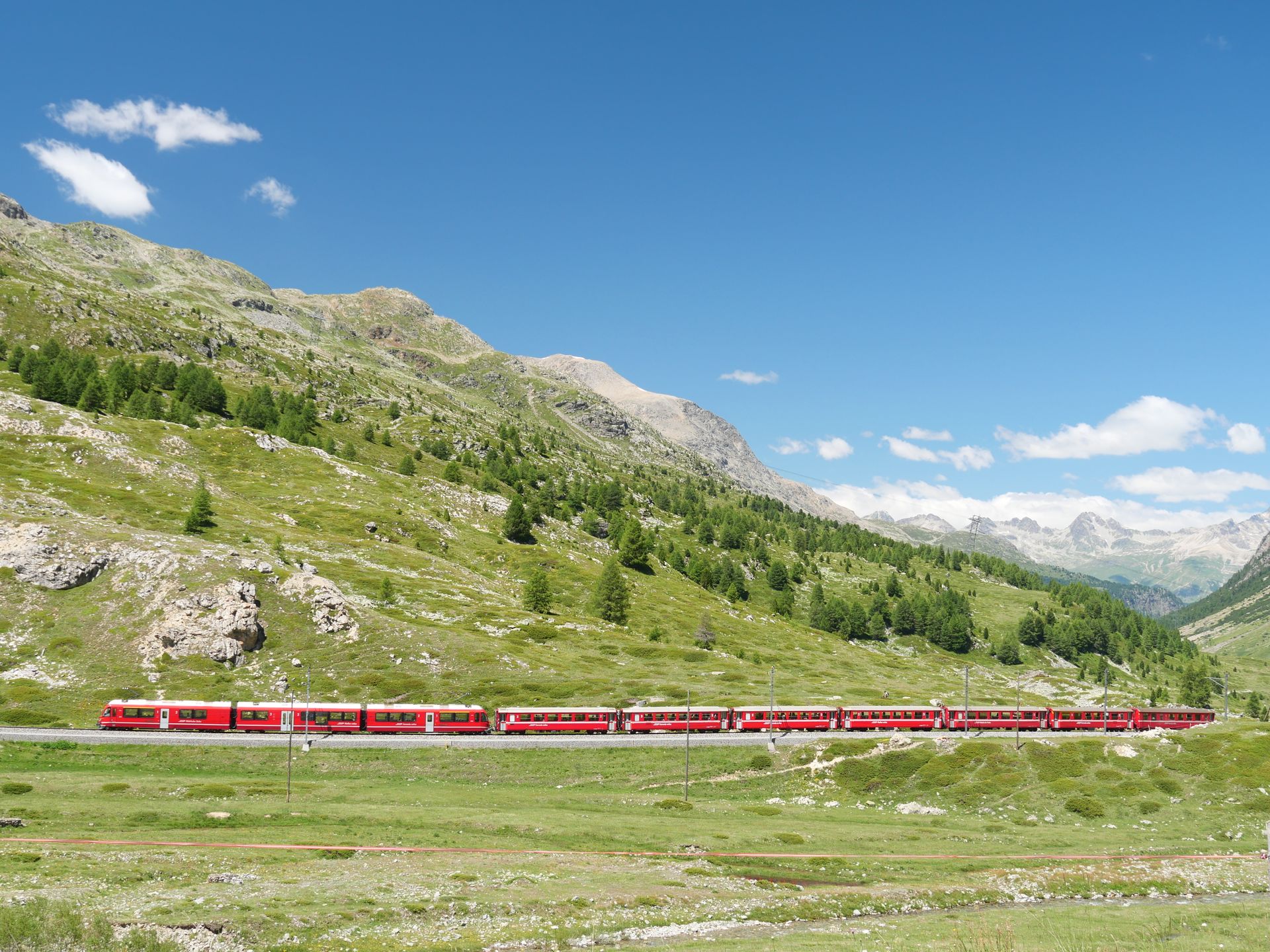
A train that doesn't announce how beautiful the route is. It simply leaves, on the minute, and the view takes care of itself.
What you can do here
No set programme, but a country full of starting points
This isn't a checklist of highlights to tick off, but a sense of what's possible when you give one valley your time instead of racing through five.
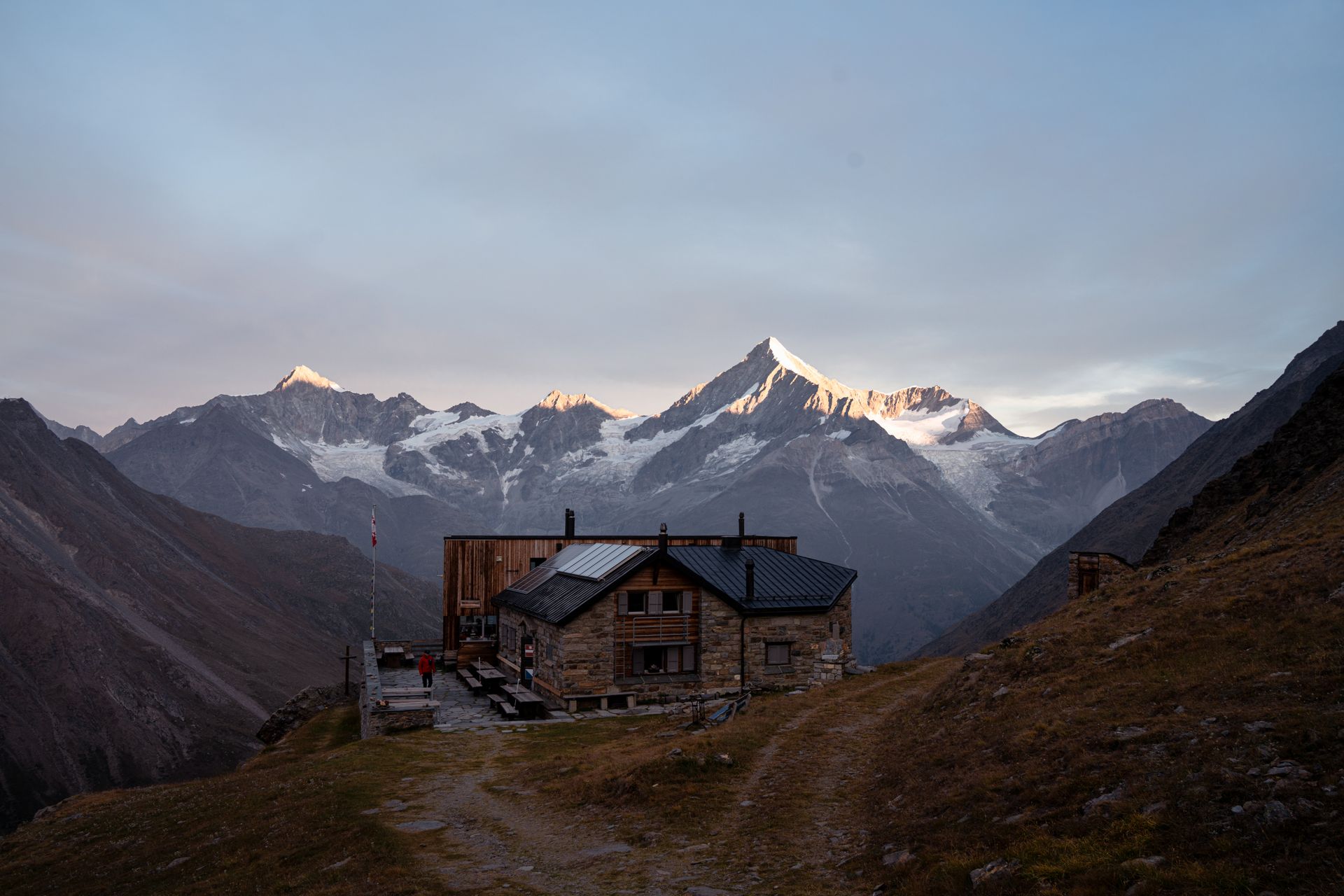
Hut to hut
Multi-day walks between staffed mountain huts, with a hot meal waiting in the evening and a new valley opening up each morning.
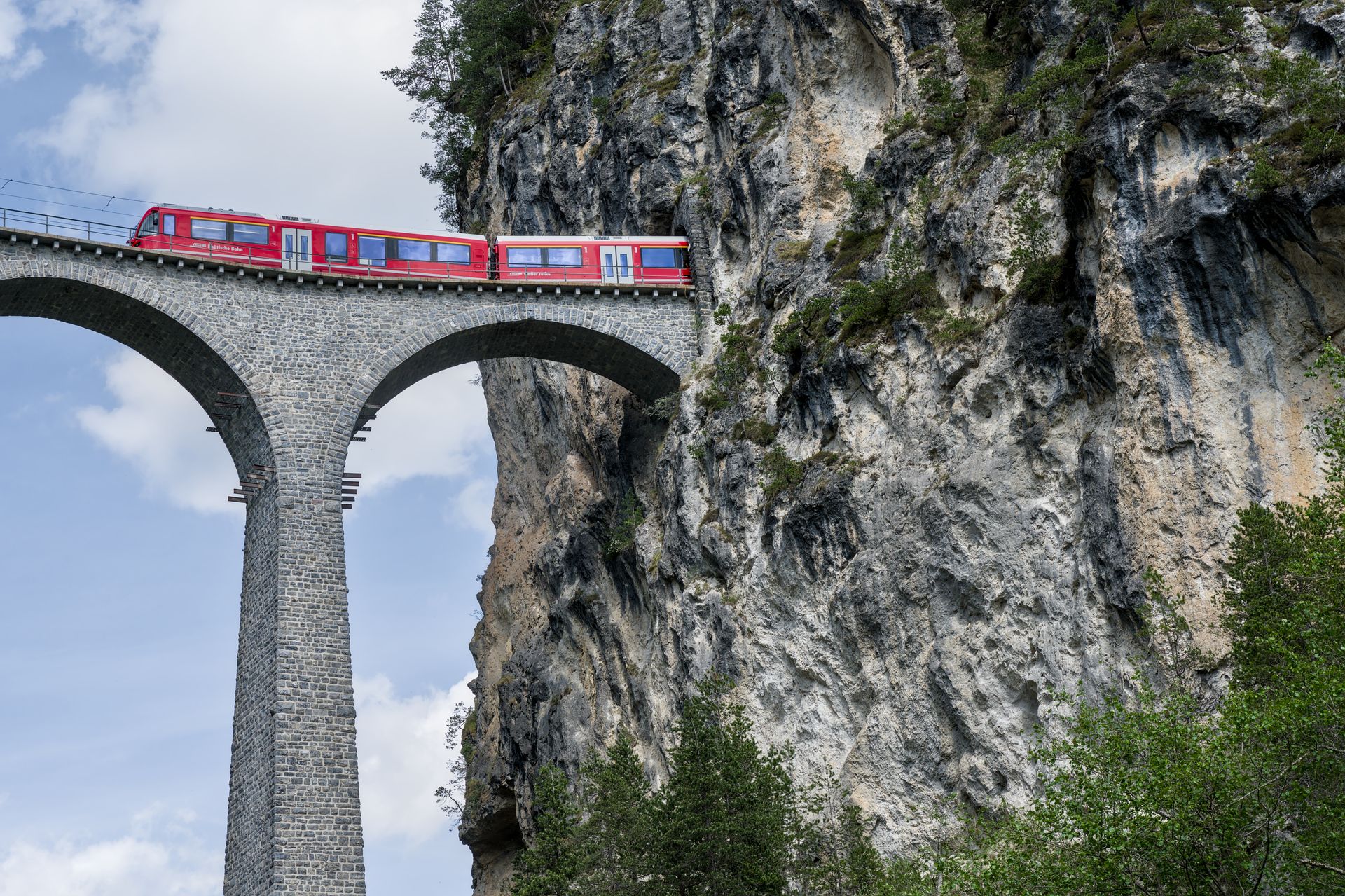
The mountain pass as transport
Taking a route like the Bernina or Furka pass the way the train is meant to be used: simply to get somewhere, not as an attraction with a running commentary.

Tasting with the winemaker
An afternoon with a small winemaker in Valais or Ticino, on slopes where the work is still done by hand.

Sailing between villages
Crossing a lake on the scheduled boat, from one lakeside village to the next, the way locals have done for a hundred years.

A village without a shop window
Stopping somewhere the centre is a bakery and a church, not a row of souvenir shops, and simply staying for the afternoon.
What you do exactly, we decide together, based on what draws you in, not on a fixed route.

At the table
More than chocolate and a watch in the window
Cheese changes from valley to valley here: the firm Gruyère from the village that gave it its name, the spicy Appenzeller, the creamy Vacherin Mont-d'Or in winter. Älplermagronen, macaroni with potato, cheese and fried onion, is the dish served up on every alpine pasture, not a restaurant invention but simply what people have always eaten.
And the wine deserves more attention than it gets: the steep slopes of Valais and Ticino produce Fendant, Cornalin and Merlot that rarely cross the border, simply because production stays small. Chocolate and watches exist too, and are good too, but they aren't what this country is really about.
When would you travel?
When to visit Switzerland
The highest trails and staffed huts are open from June into September. That's when the country shows itself most openly. In winter, from December to March, the focus shifts to snow, with a calm that has just as much to offer as the summer bustle.
The shoulder seasons are less predictable: in April there's still snow at altitude and in November it hasn't arrived yet, while the valleys themselves are already accessible. Travellers flexible about route and altitude can still find quiet, rewarding moments then.
Jan
Feb
Mar
Apr
May
Jun
Jul
Aug
Sep
Oct
Nov
Dec
Top: peak season in the mountains, trails open, huts staffed, full days of light.
Good: a character of its own, snow in winter, colour in autumn, fewer people on the trails.
Fair: a transition period with unsettled weather and high-altitude trails that may still (or already) be closed.
Looking past the highlights
Why we see Switzerland differently
Not the cable car, but the side valley Next to every well-known viewpoint lies a valley that almost nobody visits. We would rather send you there.
The train is transport, not an attraction An ordinary regional train over a mountain pass often gives you the same view as an expensive panoramic ride, minus the announcer's voice.
Four languages aren't scenery We plan a trip through the French, German or Italian-speaking part as a genuine cultural difference, not a fun fact along the way.
Quiet is a choice, not a coincidence We choose the low season or a quiet valley deliberately, not as a compromise on what would 'really' be better.
Worth knowing
Practical, without the noise.
A few things that make planning easier.
- Getting there
- Direct train from Brussels-South towards Basel or Zurich, or a flight of just over an hour to Zurich, Geneva or Basel
- Documents
- An identity card is enough; Switzerland isn't an EU member but is part of the Schengen area
- Health
- No special precautions needed; above 2,500 metres you may feel a little more short of breath, otherwise a basic level of fitness is enough
- Pace
- Public transport is notably punctual; high-altitude walking routes do call for some fitness and the right footwear
- Payment
- The Swiss franc is the currency, not the euro; card payment is accepted almost everywhere
Frequently asked questions
Isn't Switzerland mainly expensive?
The country has that reputation, but what you're really paying for is reliability: trains that run as announced, well-maintained huts, water that's safe to drink straight from the tap. We plan a trip that pays for that, not for crowds.
Can Switzerland be combined with another country?
Certainly. The border is never far away. Ticino connects almost seamlessly to Lake Como, and from Geneva you're straight into the French Alps.
Is it suitable for children?
Very much so: trains and boats make for easy transport, and many mountain huts are well used to families. We factor in altitude and daily distances when planning.
Do I need to speak German, French or Italian?
No, English is widely and well spoken. Using a local greeting is appreciated though, more than strictly necessary.
Or perhaps this
Other destinations
Still weighing it up? That is no problem at all. The right country often only becomes clear once the conversation starts.
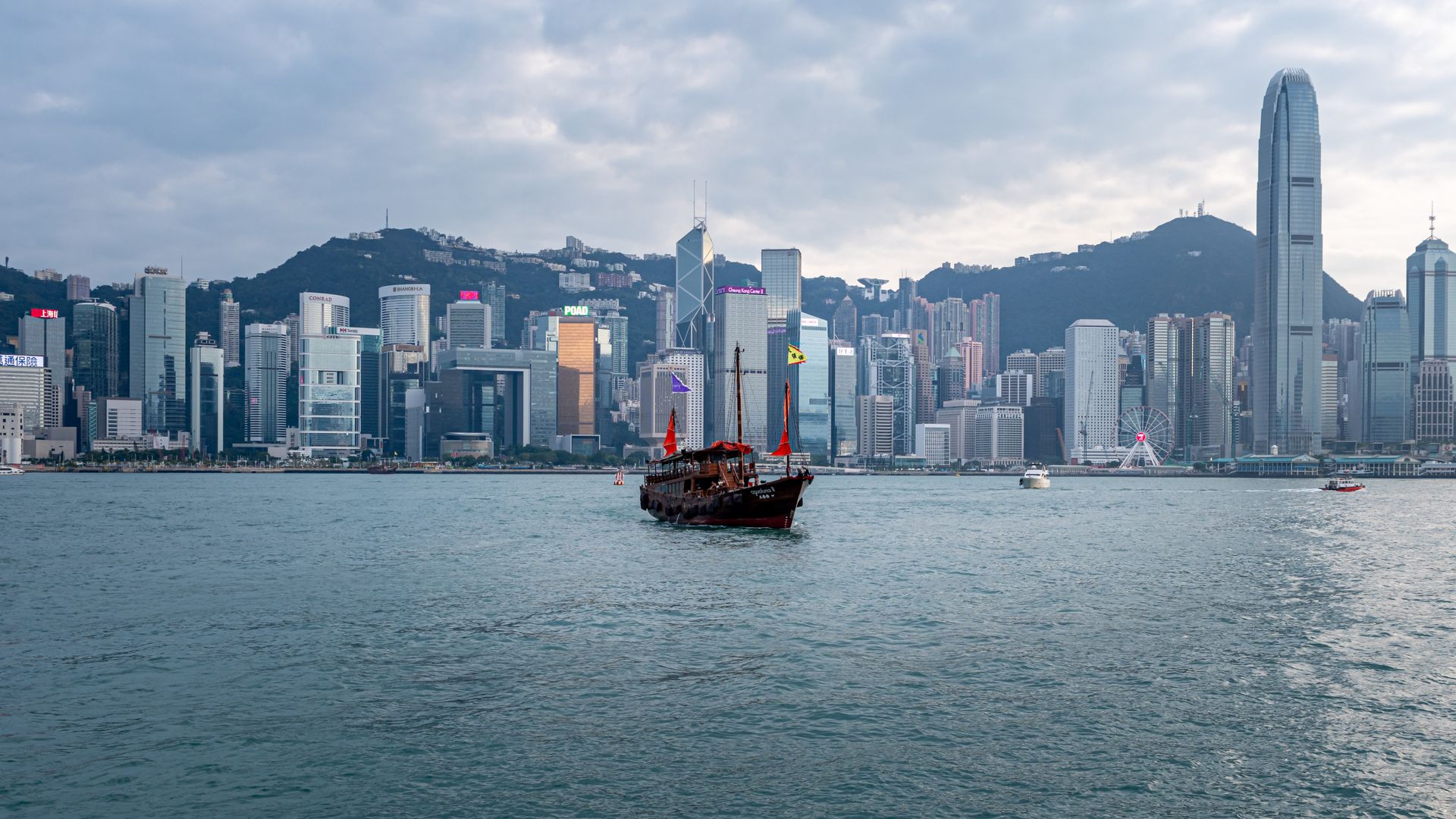
South China coast
Hong Kong
Skyscrapers give way to green islands and hiking trails within half an hour, in a city that rarely stands still.
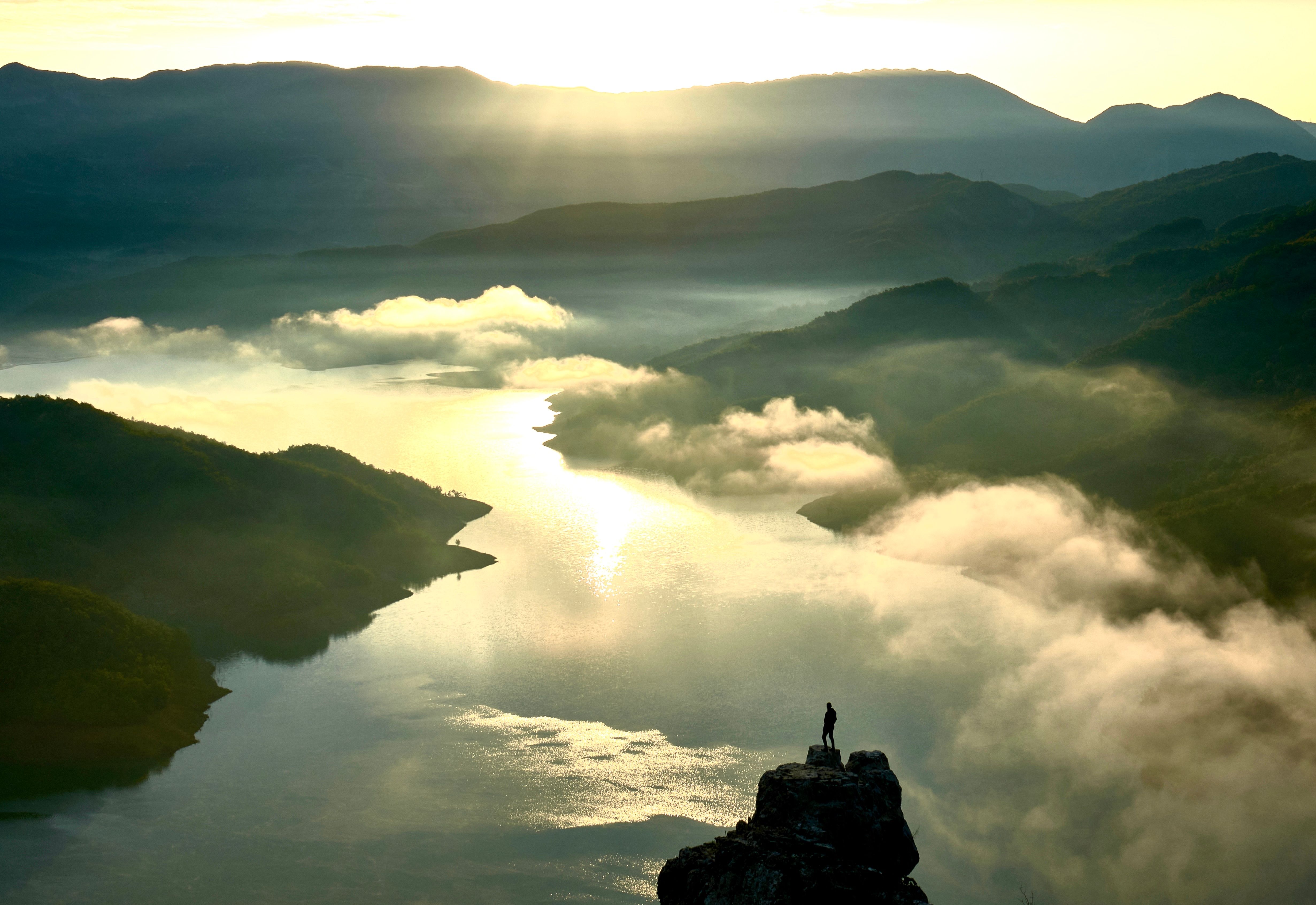
Western Balkans
Albania
Mountains that plunge straight into the sea, towns layered with history, and a coastline that has not yet bent itself to visitors.
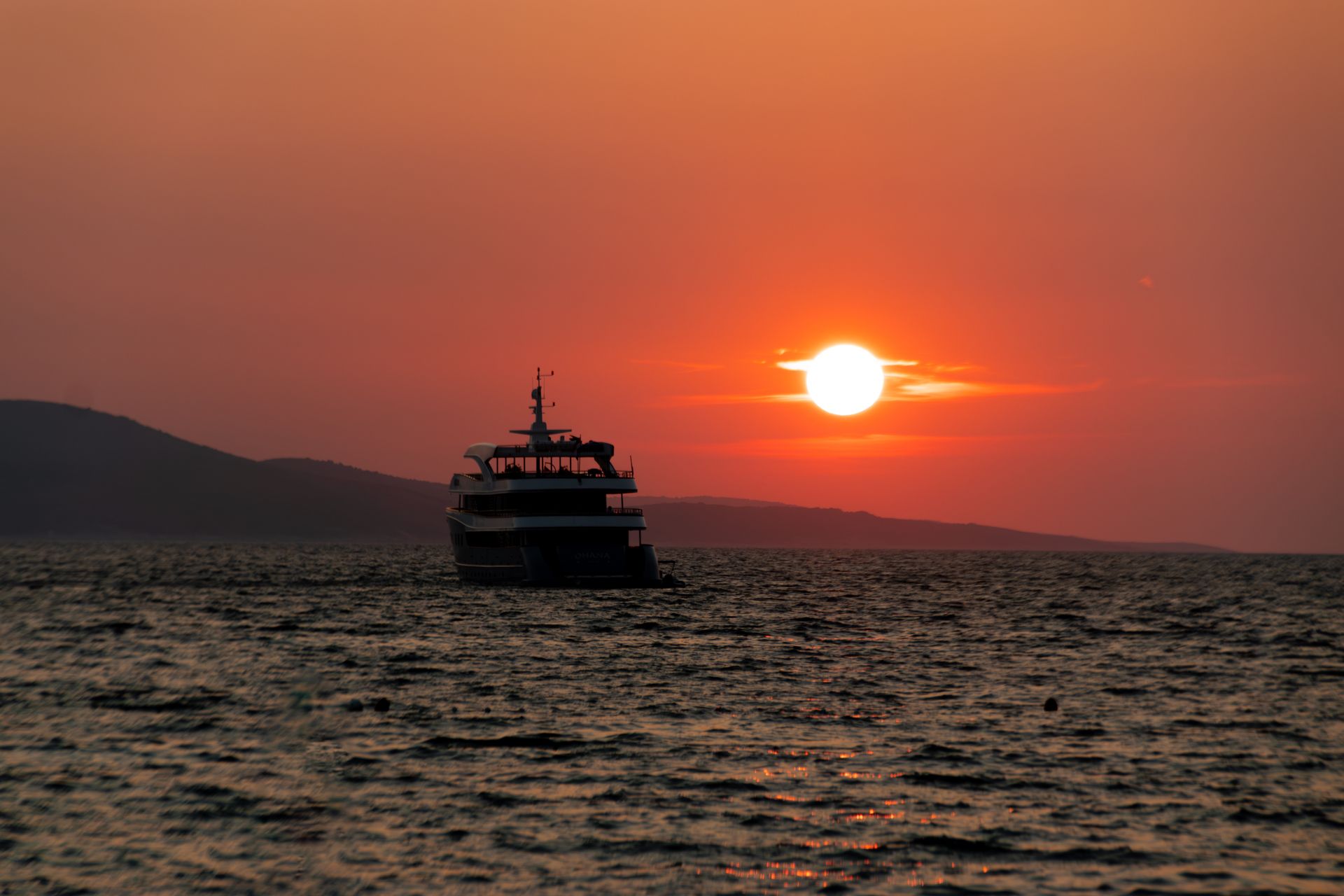
Adriatic coast
Croatia
A coastline of stone and pine, island after island, where life slows down as soon as the roads narrow.
How it works
This is how your journey to Switzerland takes shape.
Six steps, from your first story to your homecoming. The conversation and the feasibility check cost you nothing.
-
01
Tell us your story
Fill in the form or give us a call. You do not need a route yet: a country, a period or just an idea is enough.
-
02
The conversation and the check
We talk through what you are looking for, by phone or by video, and check whether it can be done. If it can, we set down together what we will make for you.
-
03
We design your journey
We build your programme up, day by day, together with our own people in the country itself.
-
04
Your proposal
You read your journey day by day, with everything that is included. You say what you would like differently, until it is right.
-
05
Ready to depart
You send us your details, we send you your travel documents. You have one fixed contact who knows your journey.
-
06
Travelling, and after
Your contact stays reachable while you are away. Once you are home, we call one more time.

The next step
How do you picture Switzerland?
Tell us which part of the country appeals to you: the high plateau, the lake, the south with its palm trees. We build the trip around what you're looking for, not around a fixed itinerary.